

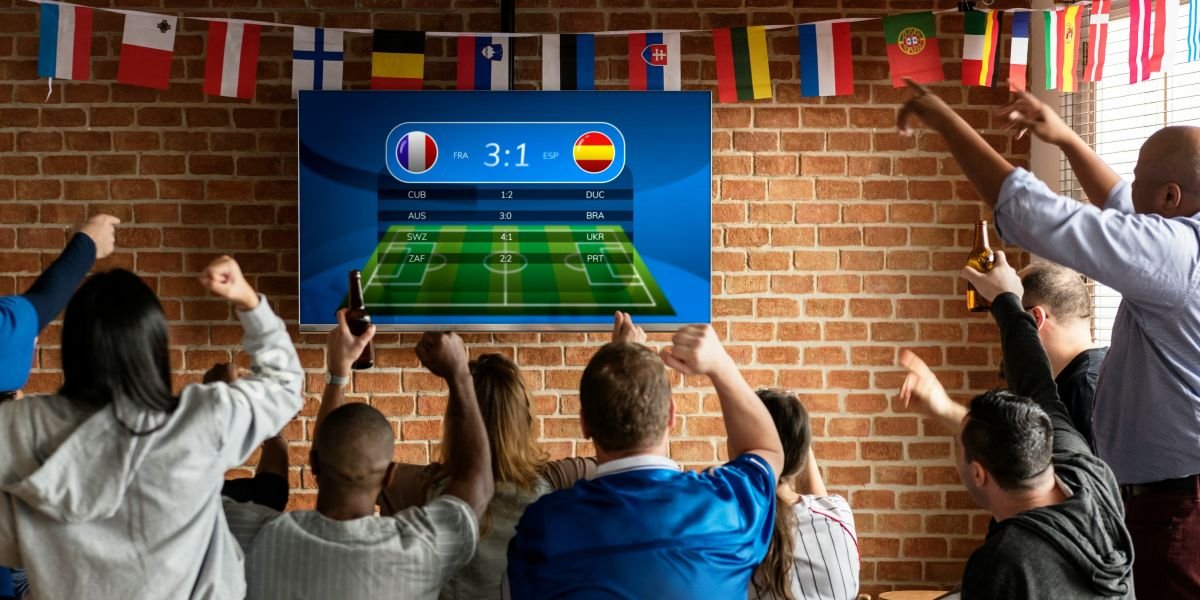
Anyone who has spent time observing sports wagering markets will have noticed a pattern that holds across sports, leagues, and geographies: the most popular teams attract the most bets. It does not matter whether those teams represent the best value on the board. It does not matter whether the odds reflect a genuine edge. Fans of Manchester United, the LA Lakers, the New York Yankees, and their equivalents in every major sport consistently push disproportionate wagering volume toward their preferred teams regardless of what the numbers say.
This is not a minor market quirk. It is one of the most structurally significant and well-documented behavioral patterns in sports wagering, and it has profound implications for how odds are set, how markets move, and how informed bettors can position themselves relative to the public. Understanding why popular teams attract more bets — and what happens to markets as a result — is foundational knowledge for anyone who wants to engage with sports wagering at more than a surface level.
The Emotional Foundation of Public Betting Behavior
At the core of the popular team phenomenon is a simple psychological reality: most people who wager on sports are fans first and analysts second. Their primary relationship with sport is emotional — built around loyalty, identity, and the genuine desire to see their team succeed. When that emotional attachment combines with the opportunity to wager, the result is predictable: bets follow fandom.
This emotional foundation produces wagering behavior that is fundamentally different from the behavior of a purely analytical bettor. A fan betting on their team is not primarily asking “does this represent good value?” They are asking “can my team win this?” — and the answer to that question is almost always filtered through the optimism that fandom naturally generates.
Psychologists refer to this as motivated reasoning — the tendency to evaluate evidence in a way that supports a conclusion we are emotionally invested in reaching. In the context of sports wagering, motivated reasoning leads fans to consistently overestimate the probability of their team winning, underweight evidence that points toward a loss, and interpret ambiguous information in the most favorable possible light.
The result is a persistent bias in the distribution of wagering volume. Popular teams — those with the largest and most emotionally engaged fan bases — attract bets that are driven by loyalty and optimism rather than analytical assessment of value.
The Role of Media and Public Narrative
Emotional attachment to a team is amplified by the media environment that surrounds major sports. Popular teams receive disproportionate coverage — more broadcast time, more analytical content, more social media discussion, more journalistic attention. This coverage does more than simply reflect public interest. It actively shapes the narrative around those teams in ways that influence wagering behavior.
When a popular team is on a winning streak, the media coverage of that streak creates a feedback loop. The team’s success generates coverage, the coverage generates optimism, the optimism generates wagering volume, and that volume in turn signals to the broader market that the team is favored. Bettors who pay attention to where the money is going — rather than to the underlying analytical case — are drawn in by the signal of concentrated public action.
Conversely, when popular teams underperform, the media narrative often frames their struggles as temporary setbacks rather than structural problems — preserving the optimistic baseline that drives continued public support. This asymmetry in narrative treatment means that the wagering bias toward popular teams tends to persist even through periods of poor performance.
How Operator Pricing Responds to Public Bias
The concentration of wagering volume on popular teams creates a direct challenge for operators: if they price markets purely on their analytical assessment of probabilities, they will consistently find themselves holding unbalanced books — taking far more liability on popular teams than on their opponents.
Operators respond to this imbalance through a process known as shade pricing or shading the line. Rather than moving the line purely in response to new information about the actual probability of outcomes, operators adjust prices to account for the anticipated direction of public money. A popular team playing a less-followed opponent will often open at odds that are slightly less generous than a purely analytical model would suggest — precisely because the operator knows that public money will flow heavily toward the popular side regardless of where the line opens.
This pricing behavior has a structural consequence that matters for informed bettors: popular teams are consistently priced at a slight discount relative to their true analytical probability. The public pays a premium for the opportunity to back their favorites, and that premium is built into the opening line before a single bet is placed.
The opponent — the less popular, less followed team — is correspondingly priced at a slight premium. This is the structural basis for what experienced bettors sometimes call “fading the public”: the observation that betting against heavily backed popular teams can offer positive expected value over large samples, not because popular teams are bad, but because they are systematically overpriced relative to their true probability of winning.
Recency Bias and the Momentum Effect
Beyond stable long-term fandom, wagering volume on popular teams is further amplified by recency bias — the tendency to overweight recent events when forming expectations about future ones. A popular team that has won its last four games will attract even more public money than usual, regardless of whether those wins were against strong or weak opposition, whether the performances were dominant or fortunate, or whether the upcoming opponent represents a meaningfully different challenge.
Recency bias combines with the media amplification effect to create momentum cycles in public wagering. A popular team on a visible winning run becomes the subject of increasingly confident public narrative. Each successive win is interpreted as further confirmation of quality. The wagering volume builds. The odds shorten. And the gap between the market price and the analytically justified probability widens further.
Understanding this dynamic is one of the reasons why distinguishing between genuine momentum — real changes in team quality or form — and statistical variance is so important for anyone trying to navigate these markets analytically. As explored in the detailed breakdown on Cheongju Insider’s analysis of how public opinion shapes odds, the line between a team genuinely performing better and a team simply being perceived as performing better is one of the most consequential distinctions in sports wagering — and the one most frequently collapsed by public bettors.
The Geography of Popular Team Bias
The popular team effect is not uniform across all markets. Its intensity varies significantly depending on the geographic concentration of a team’s fan base and the structure of the wagering market in which they are playing.
Teams with highly localized fan bases — those whose support is concentrated in a specific city or region — produce the strongest public betting bias in markets accessible to that fan base. A local bookmaker operating in Manchester will see a dramatically more skewed distribution of bets on Manchester United matches than a global platform where the wagering pool is drawn from a diverse international audience.
Global platforms, by contrast, see popular team bias driven by the worldwide reach of certain brands. Real Madrid, FC Barcelona, Liverpool, and a handful of other clubs have fan bases distributed across every continent, producing consistent global public bias that operators on international platforms must price against. This global dimension of popular team bias is a relatively recent development — a product of the globalization of sports media over the past two decades — and it has added a new layer of complexity to how operators manage their liability on marquee fixtures.
What This Means for the Informed Bettor
The structural reality of popular team bias has several practical implications for anyone approaching wagering with an analytical rather than emotional orientation.
First, it means that the odds on popular teams should always be viewed with some skepticism. The price reflects not just the operator’s assessment of probability but also the adjustment made for anticipated public money. Popular teams are rarely priced at full value — there is almost always a loyalty premium embedded in their odds.
Second, it means that opponents of popular teams — particularly those that are competent but unglamorous, with small or geographically dispersed fan bases — tend to be priced more generously than their actual quality warrants. This is not a universal rule, and it should not be applied mechanically, but it is a structural tendency that appears consistently across large samples.
Third, and most importantly, it means that separating analytical assessment from emotional attachment is one of the most valuable skills available to anyone navigating sports wagering markets. As highlighted in this examination of how odds are shaped by crowd dynamics, the odds on any given market are as much a product of collective human psychology as they are of objective probability assessment — and recognizing that distinction is the starting point for any genuinely informed approach.
Final Thoughts: Popularity Is Not Probability
The tendency of popular teams to attract disproportionate wagering volume is one of the most reliable and well-documented patterns in sports markets. It is rooted in human psychology, amplified by media dynamics, and structurally embedded in how operators price their markets.
For the casual bettor who wagers primarily for entertainment and emotional engagement, this pattern is simply part of the experience — backing a beloved team is enjoyable regardless of the analytical merits. For the bettor who approaches wagering with a more disciplined, analytical orientation, understanding the popular team effect is essential. It is the difference between navigating markets as they actually function and navigating them as one might wish they did.
Popularity is not probability. The most-bet team is not always the most likely winner. And the gap between those two things is where the most interesting structural opportunities in sports wagering markets consistently reside.
The crowd tells you where the money is going. It rarely tells you where it should go.