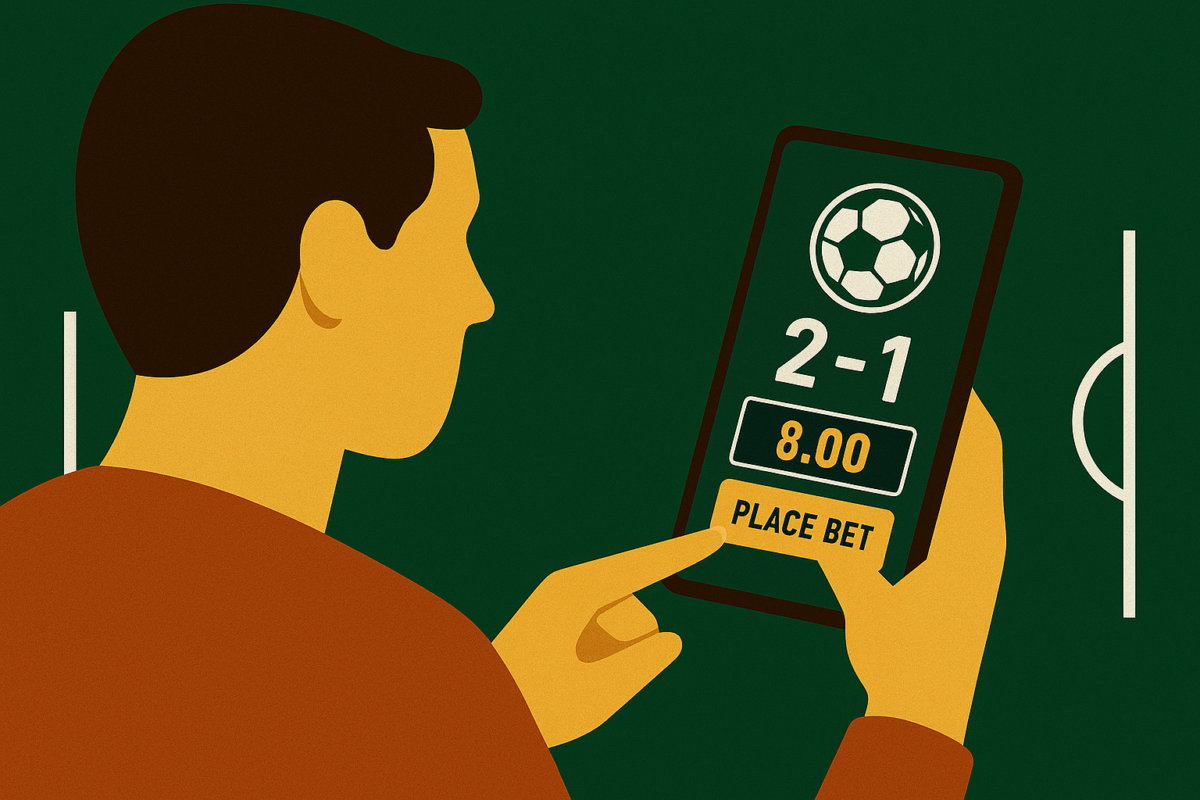
How Correct Score Betting Works: A Deep Dive into Precision Wagering

Correct score betting is one of the most thrilling—and challenging—markets in sports betting. Unlike traditional wagers that ask you to pick a winner or total goals, correct score bets demand pinpoint accuracy. You must predict the exact final score of a match. No margin for error. No wiggle room. Just pure precision.

This article breaks down how correct score betting works, the types of bets available, why it’s popular, and how to approach it strategically.

What Is Correct Score Betting?

Correct score betting means wagering on the exact final scoreline of a match. For example, betting that Manchester United will beat Arsenal 2–1. If the match ends 2–1, you win. If it ends 1–0, 2–2, or any other score, you lose.

This market is available across many sports, but it’s most popular in low-scoring games like:

  • Football (soccer)
  • Hockey
  • Baseball
  • Tennis (set scores)

High-scoring sports like basketball or American football offer correct score markets too, but the sheer number of possible outcomes makes them harder to predict.

Types of Correct Score Bets

Bookmakers offer several variations of correct score betting:

1. Full-Time Correct Score

  • Predict the exact score at the end of regulation time.
  • Most common variant.
  • Extra time and penalties do not count.

2. Half-Time Correct Score

  • Predict the score at the end of the first half.
  • Useful for matches where teams start strong or slow.

3. Second-Half Correct Score

  • Predict the score only for the second half.
  • The score resets to 0–0 at half-time for this market.

4. HT/FT Correct Score Combo

  • Predict both the half-time and full-time scores.
  • Higher odds, but both must be correct.

5. Scorecast

  • Popular in football.
  • Predict a specific player to score and the final score.
  • Example: Harry Kane to score and England to win 2–0.

How Are Correct Score Bets Settled?

Correct score bets are settled based on the official score at the end of regulation time, including stoppage time but excluding:

  • Extra time
  • Penalty shootouts
  • Golden goals

If you bet on a 1–1 draw and the match ends 1–1 after 90 minutes, you win—even if one team wins in extra time.

Why Bettors Love Correct Score Markets

Correct score betting offers high odds and big potential payouts. Because the outcome is harder to predict, bookmakers offer generous returns.

For example:

ScorelineTypical Odds
1–06.00
2–19.00
3–220.00
4–340.00

A £10 bet on a 3–2 scoreline at 20.00 odds returns £200 if correct.

This makes correct score betting ideal for:

  • Low-stakes, high-reward strategies
  • Fans with deep knowledge of team scoring patterns
  • Adding excitement to matches with clear favorites

Risks and Challenges

Correct score betting is notoriously difficult. Even experienced bettors win less than 20% of their correct score wagers. Here’s why:

  • Many possible scorelines
  • Unpredictable match dynamics
  • Injuries, red cards, and weather can shift outcomes
  • Late goals can ruin an otherwise perfect prediction

It’s easy to fall into the trap of treating correct score bets like lottery tickets. But with the right strategy, you can find value.

Strategic Tips for Correct Score Betting

1. Focus on Low-Scoring Sports

Soccer, hockey, and baseball offer fewer scoreline combinations, making predictions more manageable.

2. Analyze Team Scoring Patterns

Look at:

  • Average goals scored/conceded
  • Home vs. away performance
  • Recent form
  • Head-to-head history

Example: If two teams average 1 goal per game and often draw, a 0–0 or 1–1 bet may offer value.

3. Use Statistical Models

Some bettors use Poisson distribution or expected goals (xG) data to estimate likely scorelines.

4. Avoid High-Scoring Predictions

While 4–3 or 5–2 bets offer huge odds, they’re extremely rare. Stick to realistic outcomes.

5. Consider Defensive Matchups

When two defensive teams meet, low scores like 0–0 or 1–0 become more probable.

6. Shop for Value

Compare odds across sportsbooks. Some may offer inflated prices on certain scorelines.

Correct Score Betting in Major Tournaments

Correct score betting spikes during events like:

  • FIFA World Cup
  • UEFA Champions League
  • Copa America
  • Euro Championships

Why? Because fans are more engaged, and matches often feature tactical battles that lead to predictable scorelines.

Example: In knockout stages, 1–0 and 2–1 results are common due to cautious play.

Final Thoughts

Correct score betting is a high-risk, high-reward market that rewards precision and patience. While it’s not for everyone, those who enjoy statistical analysis and strategic wagering can find real value.

To succeed, treat correct score betting as a long-term game. Focus on realistic outcomes, analyze team patterns, and manage your bankroll wisely. With discipline and insight, you can turn this challenging market into a rewarding part of your betting strategy.

Read also: How Half-Time / Full-Time Bets Work
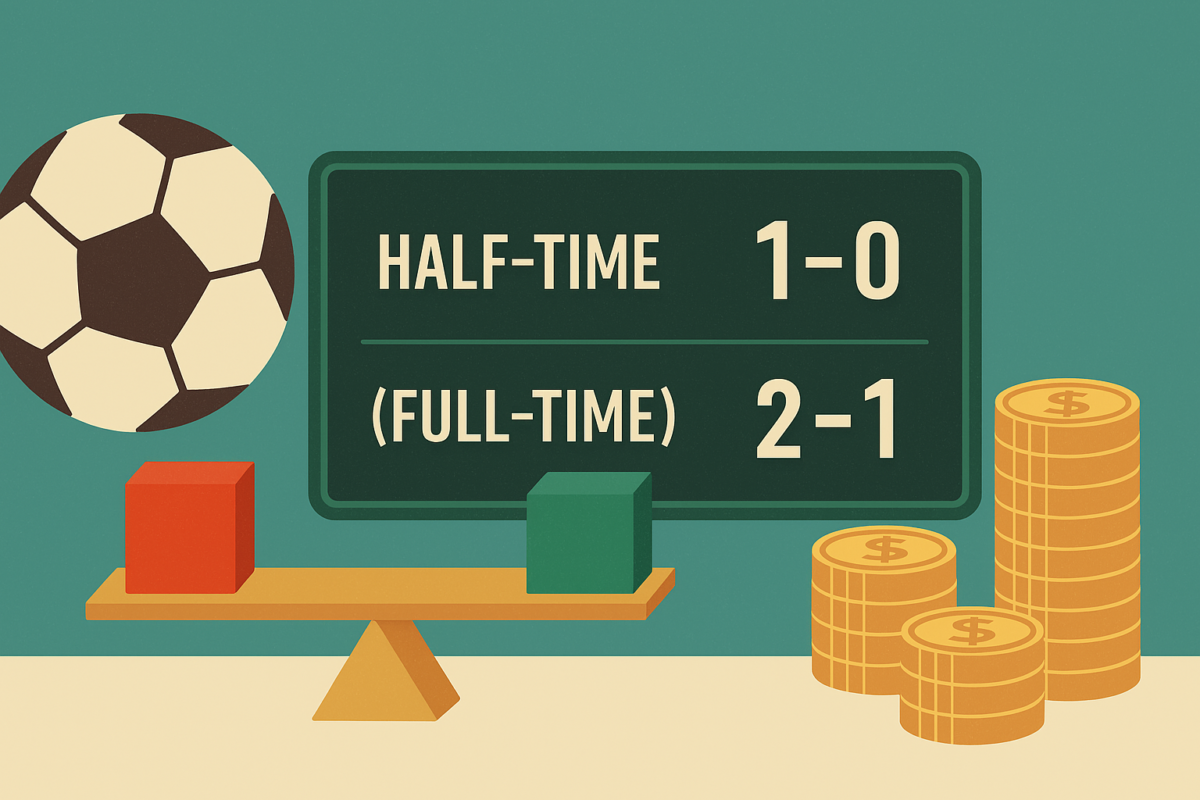
How Half-Time / Full-Time Bets Work

In the world of sports betting, few wagers combine simplicity and complexity quite like the Half-Time/Full-Time (HT/FT) bet. It’s a market that asks you to predict not just who will be ahead at the halfway mark, but also who will win by the end of regulation. That’s two outcomes in one bet—and both must be correct for you to win.

While this might sound daunting, HT/FT bets offer unique opportunities for value, especially in sports like soccer, basketball, and football where momentum shifts are common. This article breaks down how HT/FT bets work, the possible outcomes, and how bettors can use them strategically.

What Is a Half-Time / Full-Time Bet?

A Half-Time/Full-Time bet is a combination wager that requires you to correctly predict:

  1. Which team will be leading at half-time
  2. Which team will win at full-time (end of regulation)

You must get both parts right for the bet to pay out. If either prediction is wrong—even if the team you picked wins but wasn’t leading at half-time—you lose the bet.

This market is especially popular in soccer, where matches are split into two 45-minute halves, but it’s also available in other sports with clear mid-game breaks.

The Nine Possible HT/FT Outcomes

In a standard two-team match (e.g., Team A vs. Team B), there are nine possible HT/FT combinations:

Half-Time ResultFull-Time ResultCodeExample
Team A leadsTeam A wins1/1Home/Home
Team A leadsDraw1/XHome/Draw
Team A leadsTeam B wins1/2Home/Away
DrawTeam A winsX/1Draw/Home
DrawDrawX/XDraw/Draw
DrawTeam B winsX/2Draw/Away
Team B leadsTeam A wins2/1Away/Home
Team B leadsDraw2/XAway/Draw
Team B leadsTeam B wins2/2Away/Away

Each combination has its own odds, with turnaround results (e.g., 2/1 or 1/2) offering the highest payouts due to their lower probability.

Worked Example: Soccer Match

Let’s say Manchester United is playing Liverpool.

You place a bet on X/1 — Draw at half-time, Manchester United wins at full-time.

  • At half-time, the score is 0–0 → ✅ Draw
  • At full-time, Manchester United wins 2–0 → ✅ Win

Your bet wins because both conditions were met.

If Manchester United had been leading 1–0 at half-time, your bet would lose—even if they still won the match—because the half-time result wasn’t a draw.

Why Bettors Like HT/FT Markets

1. Higher Odds

Because you’re predicting two outcomes, HT/FT bets offer better odds than simple win/draw bets. Even common results like 1/1 or 2/2 can pay 2.50 to 3.50, while dramatic turnarounds like 2/1 or 1/2 can pay 15.00 to 30.00.

2. Strategic Depth

HT/FT bets reward bettors who understand game flow. Teams that start strong but fade, or those that rally late, are ideal candidates for split predictions.

3. Value in Draws

Draws at half-time are common in soccer—about 28% of Premier League matches are tied at the break. Betting on X/1 or X/2 outcomes can offer consistent value.

HT/FT in Other Sports

While soccer is the most common sport for HT/FT betting, the market exists in:

  • Basketball (NBA): Predict who leads at half-time and who wins after four quarters.
  • Football (NFL): HT/FT bets apply to regulation time only.
  • Hockey (NHL): Similar structure, but less common due to frequent ties and overtime.

Always check whether overtime is included—HT/FT bets typically apply to regulation time only.

Tips for HT/FT Betting Success

1. Research Team Trends

Look for teams that:

  • Start fast but fade
  • Tend to rally in the second half
  • Score most of their goals late
  • Have strong bench depth or coaching adjustments

2. Use Historical Data

Analyze past matches between the teams. Do they often draw at half-time? Does one team dominate late?

3. Watch for Injuries and Substitutions

Late lineup changes can affect momentum. A key striker missing may reduce second-half scoring potential.

4. Consider Home/Away Dynamics

Home teams often perform better in the second half due to crowd support and familiarity. This makes X/1 bets attractive.

Risks and Challenges

HT/FT bets are harder to win than single-outcome bets. You must be correct on both predictions, which increases volatility.

Common pitfalls:

  • Betting on favorites without considering half-time trends
  • Ignoring draw probabilities
  • Misjudging game tempo or coaching tactics

Smart bettors treat HT/FT bets as high-risk, high-reward plays—not guaranteed wins.

Final Thoughts: Two Predictions, One Bet

Half-Time/Full-Time betting is a unique market that challenges bettors to think beyond simple outcomes. It rewards those who understand game dynamics, team psychology, and scoring patterns. While it’s harder to win, the potential payouts and strategic depth make it a favorite among experienced bettors.

Whether you’re backing a dominant team to lead wire-to-wire or predicting a dramatic comeback, HT/FT bets offer a thrilling way to engage with the game—and test your predictive skills.

Read also: How Public Opinion Shapes Odds