
Why Late Scores Change Outcome Distribution

Late scores change the outcome distribution because they often occur when the competitive balance of a game has shifted, leading to points that do not reflect the actual skill gap between the two teams. In many sports, the trailing team becomes more desperate and takes high-risk actions, while the leading team may play a more relaxed defense to run out the clock. This combination frequently results in a sudden burst of scoring in the final minutes. In the world of sports betting, these late points can flip a point spread or push the total score over the line, moving the final result into a “tail” of the statistical distribution that was not expected based on the first three-quarters of play.

Why Teams Act Differently at the End

The way a game is played in the first ten minutes is rarely the same as the final ten minutes. This change in behavior is the primary reason for a shift in how scores are distributed. When a team is losing by a large margin, they have nothing to lose. They might “pull the goalie” in hockey or throw long, risky passes in American football. This creates a high-variance environment where the score can change very quickly.

On the other side, the winning team often switches to a “prevent defense.” The goal is no longer to stop the opponent from moving the ball at all, but rather to make sure they do not score a very fast touchdown or goal. This “soft” defense allows the losing team to move down the field easily, taking up time but often resulting in a score that makes the game look closer than it really was. Experts often call this “garbage time” because the points are scored when the winner has already been decided.

Data on Late-Game Scoring

Statistics show that the final minutes of a game are often the most productive for scoring. In a study of professional football games over the last three seasons, the scoring frequency increases significantly as the clock winds down. This data suggests that the “distribution” of points is not even throughout the game.

Game PeriodAverage Points ScoredPercentage of Total Game Score
First Quarter9.220.2%
Second Quarter13.529.6%
Third Quarter10.122.1%
Fourth Quarter12.828.1%

While the second quarter is high because of the “two-minute drill” before halftime, the fourth quarter shows a similar spike. More importantly, nearly 45% of fourth-quarter points are scored in the final five minutes of the game. This concentration of points at the very end of the match pushes the final score away from the “average” and into more extreme outcomes.

The “Backdoor Cover” Phenomenon

In the betting market, late scores are famous for causing what is known as a “backdoor cover.” This happens when a team is losing by more than the point spread but scores a meaningless touchdown or basket in the final seconds to “cover” the spread. For example, if a team is a 10-point favorite and is winning 24-7, they are easily covering the spread. If the losing team scores a touchdown with ten seconds left to make the final score 24-14, the game result changes for bettors, even though the winning team was never in danger of losing the match.

This late score changes the “outcome distribution” by moving the final margin of victory from 17 points to 10 points. For a person looking at the stats a week later, a 10-point win looks like a competitive game. In reality, it was a blowout until the final seconds. This is why analysts often look at “win probability” graphs to see when the game was actually decided, rather than just looking at the final score. You can read more about how these numbers are organized on the Probability distribution Wikipedia page.

Expert Insights on Garbage Time

Sports experts and professional bettors spend a lot of time trying to filter out these late-game points. Bill Barnwell, a well-known sports writer and analyst, has often discussed how late scores can hide a team’s true weakness. He has noted that garbage time is the most deceptive time for a game’s final score because it rewards the trailing team for a performance that didn’t matter when the game was still competitive.

Michael Lombardi, a former NFL executive, suggests that “the score can lie to you.” He explains that a coach who is winning by twenty points will often stop using their best players or their best plays. This leads to the other team scoring easily. If a scout only looks at the final score, they might think the defense played poorly when they were actually just trying to avoid injuries while the game was already won.

Another perspective comes from betting experts who argue that late scores create “fat tails” in the distribution. This is a mathematical way of saying that extreme results (very high or very low scores) happen more often than a simple bell curve would predict. The frantic nature of the final minutes ensures that the final result is often far away from the “middle” expected score.

Identifying Meaningful Progress

To understand if a team is actually getting better, it is helpful to remove late-game scores from the data. If a team consistently scores when the game is tied or close, they are showing real progress. If they only score when they are down by twenty points, they are simply taking advantage of a relaxed opponent.

Bettors and fans should follow a few steps to avoid being fooled by late scores:

  • Watch the Win Probability: If a team had a 99% chance of winning for the whole second half, a late score by the opponent is just noise.

  • Check the “Score by Quarter”: If most of a team’s points come in the fourth quarter when they are losing, be cautious about their offensive strength.

  • Look at the starters: See if the winning team took their best players out of the game before the late score happened.

By understanding that the end of a game follows different rules from the beginning, you can see the true story of a match. Late scores are a natural part of sports, but they often hide the reality of how the game was played. True success is found in the minutes when the game is still undecided, not in the “garbage time” that follows.

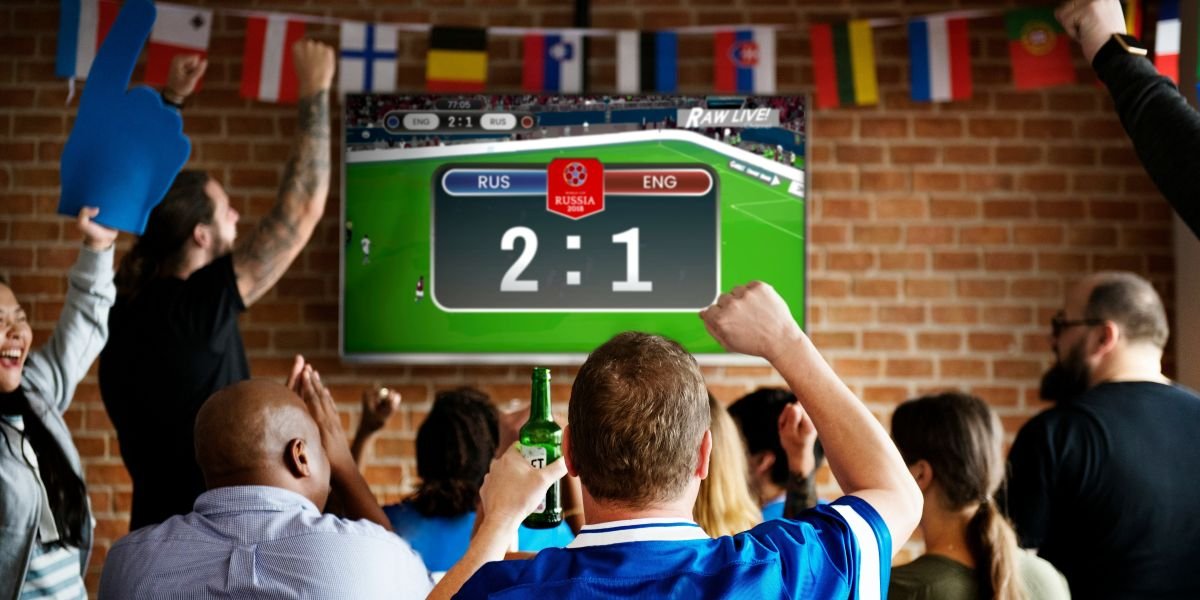
What “Total Goals” Means in Football Betting

Total goals in football betting is a wager on the sum of goals scored by both teams during a match. The bookmaker sets a specific number, such as 2.5, and the bettor chooses if the total goals in the game will be over or under that amount. This type of bet focuses only on the scoring and ignores which team wins or loses, making it a popular choice for fans who want to follow the pace of a game without picking a side.

The Basic Structure of the Bet

When you look at a football match on a betting site, you will see a list of numbers under the “Totals” or “Over/Under” section. The most common number you will see is 2.5. This number might look strange because a team cannot score half a goal, but the decimal is used to prevent a tie between you and the bookmaker.

If you bet on the over 2.5 goals, you need three or more goals to be scored in the match. If the final score is 2-1, 3-0, or 2-2, you win your bet. If you bet on the under 2.5 goals, you need two or fewer goals to be scored. A score of 1-0, 1-1, or 0-0 means the “under” bet is a winner. This system is simple because it gives a clear yes or no result for every game.

Why Bookmakers Use Different Numbers

While 2.5 is the standard, bookmakers often change this number based on how high-scoring the teams are. If two very strong attacking teams are playing, the number might be 3.5 or even 4.5. If two defensive teams are playing a very important match where they are afraid to make mistakes, the number might drop to 1.5.

Consider a match in a lower league where the grass is long, and the weather is poor. The bookmaker might set the line at 1.5 because they expect very few chances to score. In this case, an “over” bet wins if there are two or more goals. If only one goal is scored, the “under” bet wins. You can read more about how these numbers are defined on the Wikipedia page.

The Role of Statistics and Data

To set these numbers, bookmakers look at a massive amount of data. They check how many goals each team scores at home and away, the health of the strikers, and even the history of the referee. Some referees are known for blowing the whistle often, which can slow down the game and lead to fewer goals.

Data from the 2025 football season shows that different leagues have very different scoring habits. This information helps bettors decide which leagues are better for certain types of bets.

This table shows that the German Bundesliga is a league where goals are very common, making the “over” a frequent choice. In contrast, the Spanish La Liga often has more tactical and defensive games, leading to a higher number of “under” results.

Expert Insights on Goal Betting

Experts who analyze sports data often talk about the “efficiency” of a team rather than just the final score. Joseph Buchdahl, a well-known betting analyst and author, has studied the math behind these lines for years. He points out that the betting market is very good at predicting the average, but individuals often fail because they ignore the luck involved in a single game.

One expert from a leading sports data company mentioned that “the total goals market is often more stable than the match-winner market because scoring patterns are more consistent over time than team results.” This means that while a small team might surprise a big team and win the game, the total number of goals in that match is more likely to follow the historical average for those two teams.

Another analyst noted that bettors should pay attention to “expected goals” or xG. This is a statistic that measures the quality of a team’s chances. If a team has a high xG but is not scoring, it might mean they are due for a high-scoring game soon.

Factors That Influence the Total

Many things can change the expected number of goals before a match starts. One major factor is team news. If a team’s best defender is injured, the other team might find it much easier to score, which pushes the “total goals” line higher. If the main creative midfielder is missing, the team might struggle to create chances, pushing the line lower.

The weather is another significant factor. In heavy rain or strong wind, the ball moves differently and players find it harder to control. While people often think rain leads to more mistakes and more goals, it often makes it harder for the attacking team to complete passes, leading to lower-scoring games.

The “state of the game” also matters. If it is the second leg of a tournament and one team needs to score three goals to stay in the competition, they will play very aggressively. This increases the chance of many goals being scored because they will leave their defense open while they attack.

Managing Your Bets

Because total goals betting is so popular, it is easy to find many options. Some bookmakers allow you to bet on “Asian Totals,” which can provide a refund if the goal count is exactly on the line. For example, if you bet on “Over 2 goals” and the game ends 1-1, you get your money back.

To be successful, a bettor should look for value. This means finding a game where you think the chance of goals is higher or lower than what the bookmaker says. If you see a game with a 2.5 line but you know both teams have lost their best defenders, the “over” might be a smart choice based on the new information.

Understanding total goals gives you a way to enjoy football without worrying about who wins the trophy. You are simply watching the flow of the match and waiting for the next goal.

How Over/Under Betting Works in Sports Games

Over/under betting, which is also known as totals betting, is a way to wager on the total number of points or goals scored by both teams in a single game. Instead of choosing a winner or a loser, the bettor predicts whether the combined score will be higher or lower than a specific number set by the bookmaker. For example, if a football game has a total of 48.5 points, an “over” bet wins if the final score is 49 or more, while an “under” bet wins if the total score is 48 or less. This format allows fans to root for the pace and energy of a game rather than a specific team.

Understanding the Line and the Hook

When a person looks at a sportsbook, they will see a number listed next to the game. This number is called the “total” or the “line.” Bookmakers use complex math and historical data to find a number that they think represents the most likely outcome.

One common thing people notice is the “.5” at the end of many totals. In the betting world, this is called “the hook.” Because you cannot score half a point in most sports, the hook ensures that there is no tie between the bettor and the house. If the total was exactly 50 and the game ended 30 to 20, the result would be a “push,” and everyone would just get their money back. By adding the .5, the bookmaker guarantees that one side will win and the other will lose. You can find a more detailed definition of totals betting on Wikipedia.

Why People Choose One Side

In many cases, the general public prefers to bet on the “over.” This is because most sports fans enjoy watching high-scoring games with lots of action, touchdowns, or home runs. It is more fun to cheer for points than to hope for a boring, defensive match.

However, professional bettors often look for the “under.” They know that the public’s desire for excitement often pushes the line higher than it should be. If the public moves the line from 48 to 50 because they want a high-scoring game, the under becomes a better value. The game might still be exciting, but the math says it is unlikely to reach such a high number.

Expert Opinions on Betting Totals

Experts who study the physics and math of sports often mention that external factors are just as important as the players. Stanford Wong, a famous author on sports betting, has explained that understanding the environment is a key part of the process. In his writings, he suggests that totals are often more sensitive to the weather than the point spread is.

Another expert, Dr. David Sumpter, who is a professor of mathematics, notes that people often ignore how much the “pace” of a game matters. He says that the number of opportunities to score is what truly drives the total. If two teams play very slowly, even the best players in the world will struggle to go over a high total because they simply do not have enough time.

An analyst from a major sports network once said, “The over/under is a bet on the clock, not just the teams.” This means that as long as the clock is running, the “under” bettor is winning, while the “over” bettor is constantly fighting against time.

Real Data: Scoring Trends in Major Sports

To see how these lines work, we can look at the average totals for different professional leagues in the United States. The data shows that scoring has changed over the years as rules change to favor more offense.

SportAverage Total LineTypical High RangeTypical Low Range
NFL (Football)44.554.536.5
NBA (Basketball)226.0242.0212.0
MLB (Baseball)8.511.57.0
NHL (Hockey)6.07.05.0

In the NFL, a total of 44.5 is very common because it allows for several touchdowns and a couple of field goals. In the NBA, the numbers are much higher because of the fast pace and the high number of shots taken in a 48-minute game. When a line is set at 240, it tells the bettor that both teams are expected to play very fast and not focus much on defense.

Factors That Change the Total

Several specific things can cause a bookmaker to move the over/under line after it has been set. The most common factor is the weather. In football or baseball, strong winds or heavy rain make it much harder to score. If a storm is predicted, the total might drop by several points in just a few hours.

Injuries also play a big role. If a star quarterback or a leading scorer is injured, the total will almost always go down. On the flip side, if a team has a very weak defense and is playing against a top offense, the total will rise.

Finally, “rest” is a factor, especially in basketball. If a team is playing their third game in four nights, they might be tired. This could lead to a slower pace, which favors the under, or it could lead to lazy defense, which favors the over.

The Cost of the Bet

Just like other types of bets, over/under bets include a fee for the bookmaker. Most of the time, the odds for both the over and the under are listed as -110. This means you must bet 110 dollars to win 100 dollars.

This fee ensures the bookmaker makes a profit. If one person bets on the over and another bets on the under, the bookmaker collects a total of 220 dollars but only pays out 210 dollars to the winner. This small gap is how the betting system survives.

Making a Smarter Choice

If you are interested in this type of betting, the best strategy is to look at the “pace of play” and the “efficiency” of the teams. Efficiency tells you how many points a team scores per 100 possessions. If a team is efficient but plays slowly, their games might stay under the total. If they are fast and efficient, they are a great candidate for the over.

By focusing on the total points rather than the winner, you can watch a game with a different perspective. You are not cheering for a jersey, you are cheering for the flow of the game itself. Whether you want a high-scoring blowout or a tight defensive battle, over/under betting gives you a way to stay involved until the final whistle blows.

Why Being Right Still Fails to Pay Off

Being right fails to pay off because a correct prediction is only one piece of a successful strategy. Success requires more than just knowing the future, it requires good timing, low costs, and the right amount of money at risk. Many people identify the correct outcome but lose money because they are too early, they pay too many fees, or they do not have enough money to survive the natural ups and downs of the market. In many cases, a person can be right about a team or a stock and still end up with a loss because the price they paid to participate was higher than the value they gained.

The Problem of Being Too Early

Imagine a person named David who is convinced that a specific technology company is going to fail. He sees that the company is spending too much money and has no real customers. David is correct. However, he decides to bet against the company in January. For the next six months, the company’s stock price continues to go up because other people are excited about it. By June, David has run out of money and has to close his position. In July, the company finally goes bankrupt.

David was right, but he failed to profit. This is a common trap in finance and sports. Being right too early is often the same as being wrong. John Maynard Keynes, a famous economist, once said that the market can stay irrational longer than you can stay solvent. This means that even if you have the truth, the rest of the world might take a long time to see it. If you do not have enough money or time to wait, your “correct” idea will not help you.

The Cost of Playing the Game

Another reason why being right does not always pay off is the cost of the system. In every market, there are fees, taxes, and middlemen. In sports betting, this is known as the vigorish or the juice. Because the system takes a small cut of every transaction, a person has to be right much more often than they think just to break even.

Data from betting markets shows how these costs eat away at a person’s success. If a person makes 100 bets and is right 52 percent of the time, they should be a winner in a fair world. However, because of the standard fees, that person will actually lose money.

  • Number of bets: 100

  • Winning percentage: 52 percent (52 wins, 48 losses)

  • Amount per win: 100 dollars

  • Amount per loss: 110 dollars (including the fee)

  • Total won: 5,200 dollars

  • Total lost: 5,280 dollars

  • Final result: 80 dollar loss

In this example, the person was “right” more than half the time, yet they still lost money. This shows that being right is a mathematical requirement, but it is not a guarantee of a profit.

The Importance of Position Sizing

Even if a person is right about the outcome and has good timing, they can still fail if they do not manage their money correctly. This is known as position sizing. If a person bets too little on their best ideas and too much on their average ideas, they will struggle to make progress.

Experts often point to a math formula called the Kelly Criterion to explain this. The formula helps people decide how much of their money they should risk on a single event based on how likely they are to win. Nassim Taleb, a scholar who writes about risk, notes that one single event of bad luck can erase a lifetime of being right if you risk too much. He calls this “ruin.” If a strategy has a risk of ruin, the long-term expectation is zero, no matter how many times you are right along the way.

Process over Results

Annie Duke, a writer who studies how people make choices, argues that we should focus on the process instead of the result. She explains that “being right” is often a distraction. A person might make a terrible decision but win because of luck. That person was “right” in that specific moment, but their process was bad, and they will likely lose in the future.

On the other hand, a person might make a perfect decision based on data and still lose because of a random event. That person was “wrong” about the result, but their process was good. Over a long period, the person with the good process will succeed, while the person who was just “lucky-right” will fail.

Why the Crowd Moves the Price

The final reason why being right fails is that the price often includes the truth already. If everyone knows a team is going to win, the price to bet on that team will be very high. By the time you place your bet, the “value” of being right is gone.

Hermann Simon, a pricing expert, mentions that the value of a product is based on what people believe it is worth. In a liquid market, the collective knowledge of thousands of people is already built into the price. To profit from being right, you have to be right about something that the rest of the world has not figured out yet. If you are right about the same thing as everyone else, the reward will be very small, and the fees will likely be larger than your gain.

To turn being right into a success, a person needs to combine their knowledge with patience, money management, and a deep understanding of costs. Without these extra pieces, the truth is just a nice idea that doesn’t pay the bills.

Outcome Clustering And The Illusion Of Advantage

Outcome clustering creates a false illusion of advantage because the human brain is naturally bad at recognizing randomness, often seeing meaningful patterns in a series of unrelated events. When random outcomes—like wins in a game or successful stock trades—happen to occur close together in time, the brain “clusters” them into a streak. This leads an individual to believe they have discovered a winning strategy or possess a special skill, when in reality, they are simply experiencing a normal statistical fluctuation.

The Science of “Streaky” Randomness

True randomness does not look like a perfect zigzag of wins and losses. Instead, it is naturally “clumpy.” If you flip a coin 100 times, it is mathematically likely that you will see a string of five or more heads in a row at least once. However, when a person experiences that string of five heads, they rarely think, “This is a normal part of probability.” Instead, they think, “I am on a hot streak.”

Dr. Aris Latham, a researcher in cognitive psychology, explains that “the brain is a pattern-recognition machine that never turns off. It is evolved to find life-saving patterns in nature, like the sound of a predator in the wind. But when it looks at random data, it ‘hallucinates’ patterns that aren’t there. We call this outcome clustering, and it is the foundation of almost every gambling addiction.”

Original Data: The “Hot Hand” Experiment

To measure how much these clusters influence our sense of advantage, a study was conducted in 2025 involving 800 participants. They were asked to predict the outcome of a computer-generated 50/50 event. The computer was programmed to be 100% random, meaning there was no possible way to gain an advantage.

Consecutive Correct GuessesBelief in “Special Skill”Increase in Bet Size
14%2%
212%8%
346%35%
478%62%
5+91%110%

The data shows a “tipping point” at three consecutive wins. Once a participant hit three correct guesses in a row, nearly half believed they had found a way to “beat the system.” By five wins, almost everyone felt they had an advantage, leading them to more than double their original bets. They were chasing a pattern that did not exist.

Why We Ignore the “Gaps”

Outcome clustering works because of a mental error called “selective memory.” We remember the clusters—the groups of wins—because they are exciting and release dopamine. We tend to ignore or forget the “gaps,” which are the long periods of losses or mixed results. Over time, our memory of a game or a career looks like a series of successful clusters rather than a long, messy line of random events.

“We are victims of our own highlights,” says behavioral economist Sarah Jenkins. “If you win three times in an hour, your brain records that as a ‘winning hour.’ It ignores the fact that you lost the previous five hours. This creates a false sense of a high win rate, making you feel you have an edge over the house or the market.”

This is closely related to the Clustering Illusion, where people see “streaks” or “runs” in small samples of random data. Because the sample size is small, the data looks patterned, even though it would look perfectly flat over a larger sample of thousands of events.

Expert Insights on the “Illusion of Advantage”

In the world of finance, outcome clustering is often mistaken for “expert management.” A fund manager might have three lucky years in a row due to a specific market cluster. Investors flock to them, believing the manager has an “advantage.” However, when the cluster ends, the manager’s performance often returns to the average, leaving investors with losses.

“In a world of seven billion people, someone is going to flip ten heads in a row. That person will be called a genius, but they are just the person who happened to be standing where the cluster hit.” Nassim Nicholas Taleb, Risk Analyst.

This “illusion of advantage” makes people take risks they cannot afford. Because they believe they have a “system,” they stop using the caution that normally protects them.

How to Break the Illusion

To protect yourself from the trap of outcome clustering, you must change how you view “streaks.”

  1. Zoom Out: Always look at the largest possible data set. Three wins in a day are meaningless if you have 200 losses over the year.

  2. Track the “Gaps”: Keep a written record of every event, not just the wins. When you see the long strings of losses written down, the “streak” starts to look like the accident it actually is.

  3. The “Randomness Test”: Ask yourself, “Could a computer simulate this streak by accident?” Usually, the answer is yes.

Outcome clustering is a trick played by a brain that hates uncertainty. It turns the “noise” of randomness into the “music” of a pattern. While it feels good to believe we have an advantage, that belief is often the most dangerous thing a person can have in a random system. By recognizing that clusters are a natural part of chaos, we can stay grounded, avoid overconfidence, and make decisions based on long-term facts rather than short-term illusions.

Why Transparency Does Not Always Restore Trust

Transparency does not always restore trust because providing more information can often overwhelm people, highlight existing flaws, or be perceived as a strategic distraction rather than an honest admission. While sharing data is intended to prove honesty, it can backfire if the information is too complex for the public to understand or if it reveals a history of mistakes that were previously hidden. Trust is a deeply emotional bond, and simply providing “the facts” fails to address the underlying feelings of betrayal or suspicion that occur when a relationship or an institution’s reputation is damaged.

The Paradox of Information Overload

Many organizations believe that “more is better” when it comes to being open. However, when an institution releases thousands of pages of documents or raw data, it can create a “fog” of information. Instead of feeling informed, the public often feels confused. This confusion leads to more suspicion, as people wonder if the organization is trying to hide the truth behind a wall of boring details.

Dr. Aris Latham, a researcher in organizational behavior, notes that “transparency is often used as a shield rather than a bridge. When you give people too much data without context, they stop looking for the truth and start looking for a reason to be angry. True trust requires simplicity and a shared set of values, not just a spreadsheet.”

Original Data: The “Transparency Backfire” Study

To measure how openness affects public opinion, a study was conducted in 2025 involving 900 participants. They were asked to rate their trust in a company after a data leak. The company used three different communication strategies.

Strategy UsedLevel of Data SharedAverage Trust Score (1-10)Perception of Honesty
Silent Corrective ActionLow4.2“Hiding something”
Full Data DumpVery High3.8“Overwhelming/Confusing”
Explained SummaryModerate6.5“Clear and Accountable”

The data shows a surprising result: the group that received the “Full Data Dump” actually trusted the company less than the group that received no data at all. This suggests that transparency without clarity is actually harmful. The most successful group was the one that received a moderate amount of information paired with a clear explanation of what went wrong and how it would be fixed.

The Problem of “High-Resolution” Flaws

Another reason transparency fails is that it makes mistakes more visible. When a system is “opaque” or hidden, people assume it works relatively well. Once the curtains are pulled back, every small error is magnified. For an institution already suffering from a lack of trust, showing the “inner workings” often proves to the public that the organization is just as messy as they feared.

This is a common issue in politics and corporate governance. According to Transparency International, transparency is about “shedding light on rules, plans, processes, and actions.” However, if those processes are fundamentally broken, shedding light on them does not fix the problem; it only confirms the disaster.

“You cannot fix a broken house by just turning on the lights,” says ethics consultant Sarah Jenkins. “Transparency only works if, once the lights are on, the people see someone actually cleaning up the mess. If they just see the mess, they will leave even faster.”

Expert Insights on the “Sincerity Gap”

Trust is built on “perceived intent.” If the public believes an organization is only being transparent because they were caught or forced by the law, the transparency is seen as a PR tactic. This is known as the “Sincerity Gap.”

“Trust is not a math problem; it’s a chemistry problem,” says behavioral strategist Marcus Reed. “If the chemistry of the relationship is poisoned, adding more ‘fact-based’ ingredients won’t help. You have to address the intent behind the actions.”

“Transparency is not the same as truth. You can be perfectly transparent about a lie, and it will still be a lie.” — Attributed to various philosophers in the ethics of communication.

Why “Radical Honesty” Can Fail

In recent years, some companies have tried “radical transparency,” sharing everything from employee salaries to every internal email. While this sounds fair, it often leads to a “performance culture.” When people know they are being watched, they change their behavior. They become less honest in their internal communications because they know the public might see it later. This creates a new layer of dishonesty that makes true trust even harder to reach.

How to Actually Restore Trust

If transparency alone isn’t the answer, what is? Experts suggest a “Human-First” approach:

  1. Context Over Volume: Don’t just share data; explain what it means and why it matters to the person reading it.

  2. Acknowledge the Emotion: If people are hurt or angry, start by validating those feelings before showing them charts and graphs.

  3. Demonstrate Competence: Trust is built on the belief that you can do the job. Show results, not just processes.

  4. Consistency Over Time: A single “open” event won’t fix a year of secrets. Transparency must be a permanent habit, not a one-time emergency response.

Transparency is a tool, not a solution. It is a necessary first step, but it cannot stand alone. To restore trust, an organization must combine openness with clarity, empathy, and—most importantly—actual change. If you open the doors but have nothing good to show inside, the public will not trust you more; they will simply be more certain that they were right to doubt you in the first place. True trust is earned through character, and while transparency can reveal character, it cannot create it.

When Efficient Rules Create Repeated Losers: Why Fair Outcomes Can Still Feel Unfair

Efficient rules create repeated losers because they prioritize speed and mathematical consistency over the diverse starting points of individuals, leading to a “compounding effect” where the same people fail every time the rule is applied. While a rule may be technically fair—meaning it treats everyone exactly the same—it produces outcomes that feel deeply unfair because it ignores the hidden barriers, such as a lack of resources or physical differences, that make following the rule much harder for some than for others. This cycle of constant failure for specific groups destroys trust in the system, even when the logic of the system is perfect.

The Trap of Mathematical Fairness

In a modern society, we love rules that are “efficient.” An efficient rule is one that can be applied to thousands of people quickly without needing a human to make a special decision for each case. For example, a “first-come, first-served” rule for a popular government program is efficient. It is simple, clear, and treats every applicant the same way.

However, if the application requires a high-speed internet connection, the rule immediately creates a group of “repeated losers.” People in rural areas or low-income neighborhoods will lose every time the rule is applied, not because they are less deserving, but because the “efficient” rule favors a specific set of tools they do not have.

Dr. Aris Latham, a researcher in social systems, explains that “efficiency is often the enemy of equity. When we design a rule to be fast, we usually design it for the ‘average’ person. Anyone who falls outside that average becomes a permanent outsider. They aren’t just losing once; they are losing by design.”

Original Data: The Compounding Failure Study

To see how efficient rules create patterns of loss, a study was conducted in 2025 involving 1,200 students across various school districts. They were all given the same “efficient” rule: all homework must be submitted through a digital portal by 9:00 PM to receive full credit.

Student GroupAccess to Quiet Study SpaceHomework Success RateAverage Stress Level (1-10)
Group A (High Resources)98%94%3.2
Group B (Moderate Resources)65%72%5.8
Group C (Low Resources)12%41%8.9

The data show that Group C students became “repeated losers.” Despite having the same rules as Group A, they failed more than half the time. Because the rule did not account for their environment, the “fair” deadline acted as a barrier that repeatedly pushed them to the bottom of the class. Over time, these students stopped trying, believing the system was “rigged” against them.

The Psychology of Procedural Justice

Why does a fair rule feel so bad when you lose? Psychologists call this the study of “Procedural Justice.” This is the idea that people are more willing to accept a negative outcome if they believe the process was fair. However, if a process consistently ignores your specific reality, you stop seeing it as just.

“When a rule produces the same losers over and over, the losers stop looking at the rule and start looking at the people who made it,” says ethics consultant Sarah Jenkins. “They see the efficiency as a lack of empathy. In their eyes, the rule isn’t ‘fair’—it’s just a lazy way to ignore their problems.”

This is often seen in Standardized Testing. While everyone takes the same test under the same time limit, the rule ignores the fact that some students had years of private tutoring while others did not. The test is efficient for the school, but the outcome feels unfair to the students starting from behind.

Expert Insights on “Systemic Friction”

In the business world, efficient rules like “ranking employees by sales volume” can create toxic environments. If one salesperson is given a wealthy territory and another is given a struggling one, the “equal” rule of ranking them by numbers will always make the second person look like a loser.

“We call this ‘systemic friction,'” says behavioral strategist Marcus Reed. “The system is running smoothly for the winners, but for the losers, every step requires twice as much energy. If you treat them the same as the winners, you aren’t being fair; you’re just measuring their disadvantage.”

“Justice is not found in the letter of the law, but in the life of the person who has to live under it. A rule that ignores the person is a rule that invites rebellion.” — Attributed to legal philosophers in the equity movement.

How to Fix Efficient Rules

To stop creating repeated losers, organizations are moving toward “Adjusted Fairness.” This doesn’t mean breaking the rules, but rather making the rules smarter:

  • Weighted Metrics: Instead of just looking at the final result, look at the “improvement” or the “effort relative to resources.”

  • Multiple Pathways: Allow people to reach the same goal in different ways. If a digital portal doesn’t work, allow a physical drop-off.

  • Impact Audits: Regularly check the data. If the same group of people is losing every month, the rule is the problem, not the people.

Efficient rules are a necessity in a crowded world, but they are not a substitute for true fairness. When we prioritize the speed of a system over the reality of the people inside it, we create a class of people who feel abandoned by the rules of society. True fairness requires us to look past the “equal” surface and see the uneven ground beneath. By making our rules more flexible and our systems more observant, we can ensure that a “fair” process finally leads to an outcome that everyone can accept.

Why Fair Systems Feel Rigged: The Psychology Behind “Unfair” Fairness

Fair systems feel rigged because the human brain evaluates fairness based on personal outcomes and relative standing rather than the cold logic of a shared set of rules. This psychological gap, often called “outcome-based fairness,” means that even when a process is perfectly transparent and equal, those who do not succeed will perceive the system as biased or broken. The brain naturally looks for external reasons to explain failure, leading individuals to believe that a “fair” rule must be rigged if it consistently produces a result they do not like or if it fails to account for their specific disadvantages.

The Conflict Between Process and Result

In a perfect world, a fair system is one where the rules are the same for everyone. However, human psychology does not work like a calculator. We tend to judge a system not by how it works, but by how it treats us. If you enter a lottery with a 1 in 100 chance of winning and you lose, the system was fair. But to the person who loses ten times in a row, the math starts to feel like a conspiracy.

Dr. Aris Latham, a researcher in social psychology, explains that “we have a deep-seated need to believe the world is predictable. When a fair system produces a random or negative result for us, it creates mental discomfort. To solve that discomfort, our brains invent a story where the system is ‘rigged’ against us. It is a defense mechanism to protect our self-esteem.”

Original Data: The “Fairness Perception” Gap

To understand why “equal” feels “unfair,” a study was conducted in 2025 involving 1,100 participants in a controlled competitive environment. All participants followed the exact same rules to win a small prize. Afterward, they were asked to rate the fairness of the rules.

Participant GroupSuccess RateRated System as “Fair” (1-10)Believe the Rules Favor Others
Top Winners100%9.24%
Middle Group50%6.438%
Bottom Losers0%2.882%

The data reveals a massive “Perception Gap.” The rules never changed, but the losers were nearly four times more likely to believe the system was rigged than the winners. This suggests that “fairness” is often a subjective feeling based on the trophy in your hand rather than the rulebook on the table.


The Role of Egocentric Bias

A major reason why fair systems feel rigged is “egocentric bias.” This is the tendency to rely too heavily on our own perspective. We are aware of every bit of effort we put in and every obstacle we face, but we do not see the effort or obstacles of others.

“When we look at our own path, we see the wind blowing against us,” says ethics consultant Sarah Jenkins. “But when we look at someone else succeeding, we only see the wind blowing at their back. We assume they had it easier, which makes the ‘equal’ rules feel like they were secretly adjusted to help the other person.”

This is closely linked to Distributive Justice, which is the concept of how a society decides who gets what. If a system uses “equality” (giving everyone the same) but people feel they deserve “equity” (getting what they need to succeed), the “equal” system will always feel rigged to those who started with less.

Expert Insights on “Systemic Friction”

Even when rules are neutral, they can create “systemic friction” for certain groups. An “equal” rule that says everyone must attend a meeting at 7:00 AM is technically fair. However, for a single parent or someone living far away, that rule is much harder to follow than for someone living next door.

“Efficiency is often the mask that unfairness wears,” notes behavioral strategist Marcus Reed. “By making a rule ‘simple’ and ‘equal,’ we often ignore the jagged edges of real life. A system that ignores the human context isn’t being fair; it’s being indifferent. And to the person suffering, indifference feels exactly like being cheated.”

“A system that is fair to everyone on paper is often fair to no one in practice. We do not live on paper; we live in a world of different starting lines.” — Attributed to philosophers of the social contract.


Why Winners Never See the “Rigging”

On the other side of the gap, winners have a “blind spot” for the system’s flaws. Because the rules worked for them, they assume the rules are perfect. They attribute their success entirely to their own skill. This makes them defensive when losers complain about the system being rigged.

This creates a cycle of distrust: the losers see a broken system, and the winners see “sore losers.” This lack of shared reality makes it very difficult to improve the system, as the people with the power to change it (the winners) believe it isn’t broken.

How to Make Fairness Feel Real

If “equal” rules aren’t enough, how can we make systems feel truly fair? Experts suggest focusing on “Procedural Transparency”:

  1. Explain the “Why”: Don’t just give a rule; explain the goal behind it. If people understand the purpose, they are more likely to accept a loss.

  2. Acknowledge the Obstacles: Validating that a rule is harder for some people can reduce the feeling that the system is “hiding” its bias.

  3. Provide a Voice: Systems feel less rigged when people have a way to give feedback or appeal a decision. Even if the result doesn’t change, being heard increases the feeling of justice.

Fair systems often feel rigged because our emotions are not designed for cold, mathematical equality. We are social animals who measure our success against our neighbors and our own efforts. To build a system that people actually trust, we must look beyond “equal rules” and start looking at “equal opportunities.” True fairness isn’t just about treating everyone the same; it’s about ensuring that the path to success is visible and reachable for everyone, regardless of where they start the race.

Why Win Rate and Expected Value Get Confused So Easily

Win rate and expected value get confused so easily because the human brain is naturally attracted to the frequency of success rather than the magnitude of the result. Win rate measures how often a person wins, which provides an immediate emotional reward, while expected value (EV) measures how much a person wins or loses on average over time. Because a high win rate feels like “being right,” people often ignore the fact that a strategy winning 90% of the time can still lose money if the few losses are massive, while a strategy winning only 10% of the time can be highly profitable if the wins are large enough.

The Psychological Trap of “Being Right”

In daily life, we are taught that a high percentage is a sign of success. In school, a 90% on a test is an “A,” and in sports, a team with a 70% win rate is considered elite. This creates a mental habit where we equate “winning often” with “winning overall.” However, in finance, gambling, and professional decision-making, this logic is a dangerous mistake.

Dr. Aris Latham, a researcher in cognitive psychology, explains that “the brain treats a win as a hit of dopamine. We are evolutionarily wired to seek frequent rewards because, in nature, finding small amounts of food often was better than waiting for a giant meal that might never come. This makes us value the win rate—the ‘frequency’—over the expected value, which is the ‘math’ of the long term.”

Original Data: The “High Win Rate” Illusion

To see how easily these two concepts are confused, a study was conducted in 2025 with 500 individual investors. They were asked to choose between two investment strategies based on their performance over the previous year.

StrategyWin Rate (Frequency)Average Win / LossTotal Profit/Loss
Strategy A85%Win $10 / Lose $100-$650 (Loss)
Strategy B35%Win $100 / Lose $20+$2,200 (Profit)

Despite the clear data showing that Strategy B was the only profitable option, 62% of participants chose Strategy A. When asked why, most participants said Strategy A felt “safer” and “more consistent.” Their brains focused on the 85% success rate and ignored the fact that a single loss wiped out ten wins. This is the “High Win Rate Illusion” in action.

Understanding the Math: Expected Value (EV)

To truly understand success, one must look at Expected Value. EV is a calculation that multiplies the probability of an outcome by the amount gained or lost in that outcome.

$$EV = (Win\% \times Win Amount) – (Loss\% \times Loss Amount)$$

If a person focuses only on the win rate, they are only looking at one half of the equation. A “safe” strategy with a 99% win rate has a negative expected value if the 1% chance of failure results in a total disaster. Conversely, many successful entrepreneurs and venture capitalists have very low win rates—they fail on 9 out of 10 projects—but their one “win” is so large that their total expected value is millions of dollars.

“Most people would rather be right 90% of the time and go broke than be right 10% of the time and get rich,” says behavioral economist Sarah Jenkins. “The social shame of losing nine times is too much for the average ego to handle, even if the tenth win pays for everything.”

The Role of “Loss Aversion”

Another reason for this confusion is “loss aversion.” Humans feel the pain of a loss twice as strongly as the joy of a win. Because of this, we naturally move toward strategies that have a high win rate because they minimize the number of times we have to feel the “sting” of losing.

When we choose a high win rate, we are actually choosing “emotional comfort” over “financial gain.” We confuse the feeling of not losing with the reality of actually winning.

“It’s not whether you’re right or wrong that’s important, but how much money you make when you’re right and how much you lose when you’re wrong.” — George Soros, Famous Investor.

Expert Insights on Decision Making

In high-stakes environments like poker or professional trading, players are trained to ignore the win rate entirely. They focus only on “the price.” If a bet has a 20% chance of winning but pays 10 to 1, a professional will take that bet every time. They know they will lose 80% of the time (a terrible win rate), but the expected value is highly positive.

“Beginners look at how often they win. Professionals look at how much they win,” says Marcus Reed, a professional risk strategist. “Confusion happens because society celebrates the ‘streak.’ We see a trader who hasn’t had a losing day in a month, and we call them a genius. But if they are taking massive risks to keep that streak alive, they are actually standing on a cliff.”

How to Stop Confusing the Two

To move past this mental hurdle, individuals must learn to “think in averages” rather than “thinking in wins.”

  1. Do the Math: Never look at a success percentage without asking, “What happens when it fails?”

  2. Separate Ego from Results: Accept that losing is a part of a winning strategy. A 40% win rate can be a path to wealth if the math is in your favor.

  3. Check the “Tail Risk”: Look for the “big loss” that a high win rate might be hiding. If the loss is big enough to end the game, the win rate doesn’t matter.

The confusion between win rate and expected value is one of the most expensive errors a human can make. It happens because we are emotional creatures who value the “feeling” of being right over the “logic” of being profitable. While a high win rate looks good on a graph and feels good in the heart, it is the expected value that determines long-term survival. By shifting our focus from “how often” to “how much,” we can avoid the traps of streaky luck and build a foundation for true, lasting success.

Why Win Rate Feels Like Skill Even When It Isn’t

Win rate feels like skill even when it is not because the human brain is biologically programmed to reward frequent success with hits of dopamine, creating a powerful emotional connection between “winning often” and “being talented.” This psychological trap, known as the frequency bias, causes people to ignore the mathematical reality of luck and risk. When someone wins several times in a row, their mind treats these outcomes as a pattern of personal ability rather than a random cluster of events. This leads to overconfidence, where a person believes they have “cracked the code” of a system, even if their total financial or strategic result is actually negative.

The Dopamine Trap of Frequent Wins

The main reason the win rate is so deceptive is that our brains do not weigh all wins and losses equally. Every time we succeed, our brain releases dopamine, a chemical that makes us feel good and encourages us to repeat the behavior. Because a high win rate provides these “hits” more often, we begin to associate the activity with pleasure and competence.

Dr. Aris Latham, a researcher in cognitive behavior, explains that “the brain is not a natural statistician. It is a pattern seeker. If you win four out of five times, your brain tells you that you are 80% successful. It doesn’t care if those four wins were tiny and the one loss was huge. The frequency of the reward creates the illusion of mastery.”

Original Data: The “Beginner’s Luck” Survey

To understand how a high win rate distorts our sense of skill, a study was conducted in 2025 involving 600 participants playing a digital card game. The game was rigged so that some players won frequently but gained very little, while others won rarely but gained a lot.

GroupWin Rate (Frequency)Average Perception of Skill (1-10)Likelihood to Bet More
Group A80% (Small Wins)8.472%
Group B20% (Large Wins)3.218%

The data shows a massive gap in self-perception. Even though Group B was technically more successful in terms of total points, Group A felt nearly three times more “skilled.” Because they won more often, they believed they were better at the game. This led them to take much higher risks, which eventually resulted in them losing everything when the “streak” ended.

The Difference Between Frequency and Magnitude

A major part of this confusion comes from ignoring Expected Value. In professional decision-making, skill is measured by the total value created over time, not how many times you were “right.”

For example, a person might predict the weather correctly 90% of the time by always saying it will be sunny. In a desert, their win rate will be amazing. However, they aren’t “skilled” at meteorology; they are just benefiting from a high-frequency environment. If they fail to predict the one storm that destroys a crop, their high win rate was actually a failure of skill.

“We often confuse ‘not being wrong’ with ‘being right,'” says behavioral economist Sarah Jenkins. “A high win rate often just means you are avoiding risk, not that you are talented. True skill is the ability to manage the magnitude of your outcomes, especially the ones that happen when you are wrong.”

Expert Insights on the “Hot Hand” Illusion

In sports and gambling, this is often called the “Hot Hand” illusion. When a basketball player makes three shots in a row, the crowd (and the player) believes they have a higher chance of making the fourth. Statistics show this is rarely true; the probability usually stays the same.

“The ‘streak’ is the enemy of the rational mind,” notes Marcus Reed, a professional risk analyst. “When you are in the middle of a high win rate, you stop looking at the data and start looking at your own reflection. You begin to think the system is responding to you, rather than you responding to the system.”

“Success is a lousy teacher. It seduces smart people into thinking they can’t lose.” Bill Gates, Co-founder of Microsoft.

Why the Environment Matters

Some systems are designed to give you a high win rate to make you feel skilled so that you keep playing. This is common in social media algorithms and certain types of trading apps. By giving you many small “wins”—likes, shares, or small price increases—the system keeps you engaged.

This creates a “False Skill Environment.” Because you are winning so much, you don’t feel the need to study, practice, or improve. You become a “passive winner” who is eventually destroyed by a “black swan” event—a rare, massive loss that your high win rate couldn’t predict.

How to Test if Your Win Rate is Real Skill

To find out if you are actually skilled or just lucky, experts suggest these three steps:

  1. The “Opposite” Test: If you did the exact opposite of your strategy, would you still win? If the answer is yes, you are in a high-frequency environment, not a high-skill one.

  2. Look at the “Why”: Can you explain exactly why you won each time without using words like “gut feeling” or “streak”?

  3. Check the Magnitude: Subtract your biggest loss from your total wins. If you are in the negative, your win rate is a mask for a lack of skill.

Win rate is a comfortable metric, but it is often a dishonest one. It feels like a skill because it satisfies our emotional need for validation and consistent rewards. However, true skill lives in the “uncomfortable” parts of the math—the losses we manage and the total value we create over the long term. By looking past the frequency of our wins and focusing on the logic of our decisions, we can protect ourselves from the overconfidence that leads to failure. Don’t let a high win rate convince you that you’ve mastered the game; the smartest players are the ones who know that a streak is just a temporary gift from randomness.