The Red Devils, Street Cheering, and Korean Football Identity: Understanding a Cultural Phenomenon Ahead of World Cup 2026

As the 2026 FIFA World Cup approaches, Korean fan communities are preparing to support the national team from a continent away, across a time difference that will push kickoff times into the early hours of the morning. Understanding what that communal engagement means — and where it came from — requires going back to 2002, the year Korean street cheering culture became something the world had never quite seen before.
Where the Red Devils Began
The official supporters club of the South Korean national football team did not begin as a mass movement. It began as a small group of dedicated fans who believed that organized support for the national team could be something more than individuals watching games separately.
The Great Hankuk Support Club was established in December 1995 as the first formal fan organization for the Korean national team. Its name evolved through online forum discussion, and by early 1997 the group had adopted the name Red Devils — a phrase traced back to the 1983 FIFA World Youth Championship in Mexico, where the South Korean youth team reached the semifinals and impressed foreign media enough to earn the nickname Red Furies. Translated back into Korean and eventually back into English, the name Red Devils stuck and became the official identity of the supporters organization.
For several years, the Red Devils functioned as an enthusiastic but relatively small community. Korea had not won a match at the World Cup finals in any of its previous appearances. The national team had a loyal following, but football did not yet occupy the position in the national consciousness that it would after 2002.
2002 and the Transformation of Public Space
When South Korea co-hosted the FIFA World Cup with Japan in 2002, something happened in the streets of Korean cities that surprised the world and changed the relationship between Korean public life and football permanently.
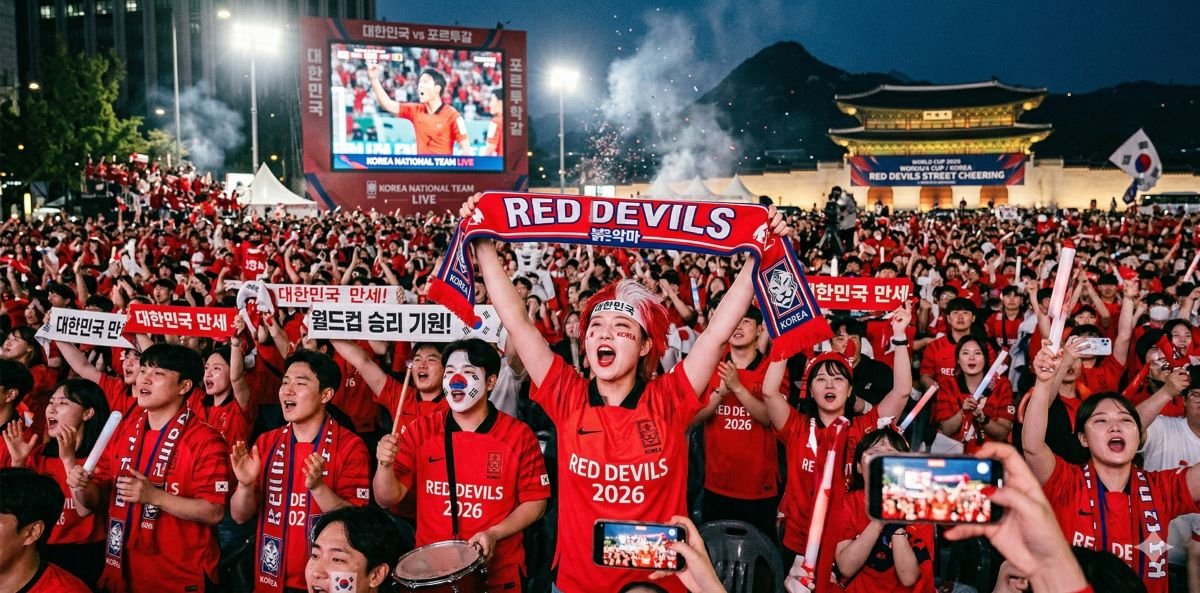
A cumulative 22 million people came out onto the streets of Seoul and other major cities across South Korea’s seven World Cup matches during that tournament. More than 2,000 large screens were set up at approximately 1,800 locations across the country. Fans dressed in red, wearing the colors of the national team, gathered in public squares, parks, and open spaces to watch matches together — not because they lacked access to television at home, but because watching together in public had become an experience in itself.
The worldwide media were taken entirely by surprise. The images of millions of Koreans in red filling the streets of Seoul were broadcast globally and generated an enormous amount of international commentary. Here was a form of collective sports engagement that combined the quality of broadcast viewing with a communal, outdoor, participatory energy that stadium attendance alone could not have produced.
The Sociological Significance of What Happened
What made 2002 distinctive was not simply the scale. It was the character of the gatherings and what they revealed about Korean society at that specific moment.
Street celebrations brought out unity in a time of increasing individualism, particularly among younger Koreans. Korean society in the early 2000s was navigating real generational tensions — between the industrialization generation in their 50s, the pro-democracy generation in their 30s and 40s, and a younger generation in their teens and twenties who were often criticized for self-centeredness and a perceived lack of civic engagement. In the streets during the 2002 World Cup, those generational boundaries dissolved. People who had little else in common cheered together, coordinated together, and experienced something together.
The Red Devils also shaped how civic conduct within the gatherings was understood and practiced. After Korea’s first match, the streets where the crowd had gathered were left littered. The Red Devils responded by organizing a coordinated cleanup effort for subsequent matches, involving ordinary citizens in the process. What began as a fan club behavior became a model of civic responsibility that media coverage and public commentary celebrated widely.
FIFA Recognized What Korea Created
The global impact of Korean street cheering culture was formally recognized when FIFA introduced the Fan Fest concept beginning with the 2006 World Cup in Germany — a format directly influenced by what had happened spontaneously in Korean public spaces four years earlier. The organized public viewing area, the giant screen in a civic space, the communal experience of watching football as a shared public event rather than a private domestic one — these were all features that Korean street cheering culture had demonstrated could work at an enormous scale.
During the semifinal match between South Korea and Germany, nearly 7 million Koreans — approximately one in seven of the entire national population — gathered at public viewing areas simultaneously. That figure has remained one of the most cited statistics in the sociology of sports fandom precisely because it illustrates the degree to which collective engagement had transcended ordinary fan behavior and become a form of national participation.
What the Legacy Means for 2026
The 2026 FIFA World Cup presents Korean fan communities with a logistical challenge that did not exist during previous tournaments held in Asian or European time zones. South Korea’s group stage matches are scheduled in Mexico — meaning kickoff times will fall in the early hours of the Korean morning. The June 11 opening match against Czechia kicks off at a time that, converted to Korean Standard Time, places the match deep in what would normally be sleeping hours for most of the country.
This time difference does not eliminate the possibility of communal viewing, but it reshapes what it can look like. Organized public gatherings, the kind that filled Gwanghwamun Square and city centers across Korea during previous World Cups, are harder to sustain at 3am or 4am on a weekday. The communal energy that Korean street cheering culture produces depends partly on the organic nature of people choosing to be outside together — and the North American time zone creates a threshold that will limit participation in that form of collective experience.
What may fill that space is the digital equivalent of street cheering: streaming platform chat functions, fan community platforms, and real-time social media engagement that allow supporters to experience matches collectively without sharing physical space. Whether that constitutes the same form of civic participation that 2002 produced is a question that Korean sports culture will answer through the tournament itself.
For Cheongju specifically, a city with its own civic character and community spaces, the history of Korean street cheering provides meaningful context for thinking about how communal football engagement takes shape. How that tradition translates into a tournament watched from living rooms and on phone screens in the early morning hours is not simply a logistical question — it is a cultural one.
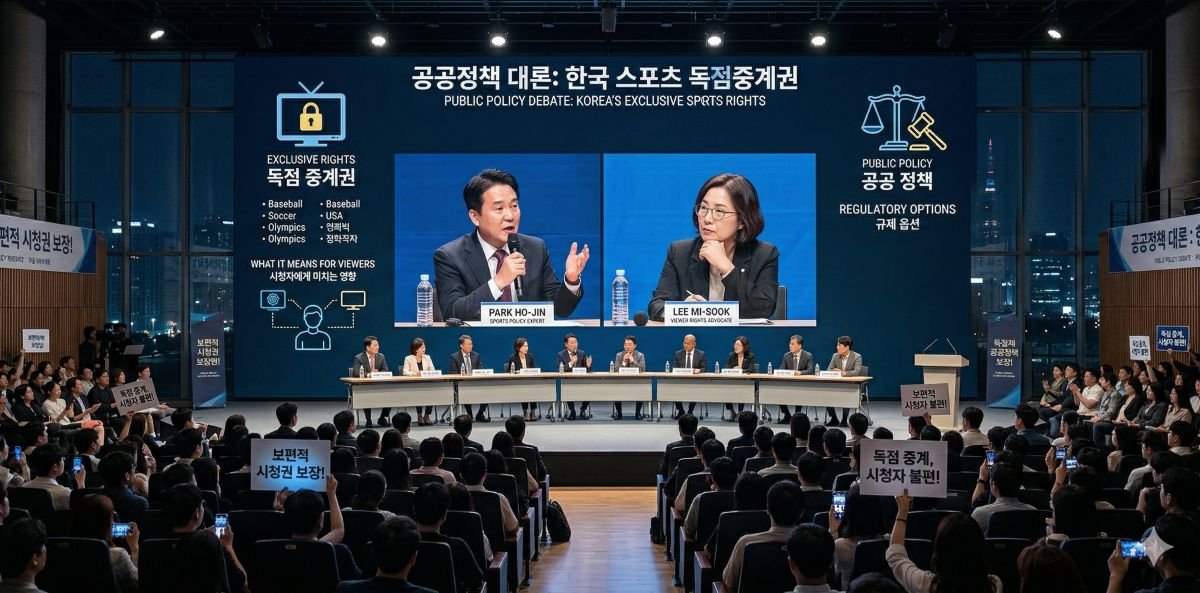
How broadcasting access shapes the conditions under which communities can engage with major sporting events is directly relevant to this cultural context. For civic context on the regulatory debate around who can actually watch the World Cup this summer, Korea’s Sports Broadcasting Exclusive Rights Debate offers parallel framing on how policy decisions shape public access to football. For analytical context on how cultural attitudes toward sports engagement vary across regions and what those differences reveal about the social function of collective fandom, 글로벌 스포츠 참여 문화와 한국의 관점 provides useful sociological framing on the relationship between sports culture and civic identity.
The Red Devils did not create Korean football identity in 2002. But they gave it a form, a public language, and a set of civic practices that have persisted through every subsequent tournament. Understanding where that came from is the starting point for understanding what June 2026 will mean for Korean fans watching their team from the other side of the world.