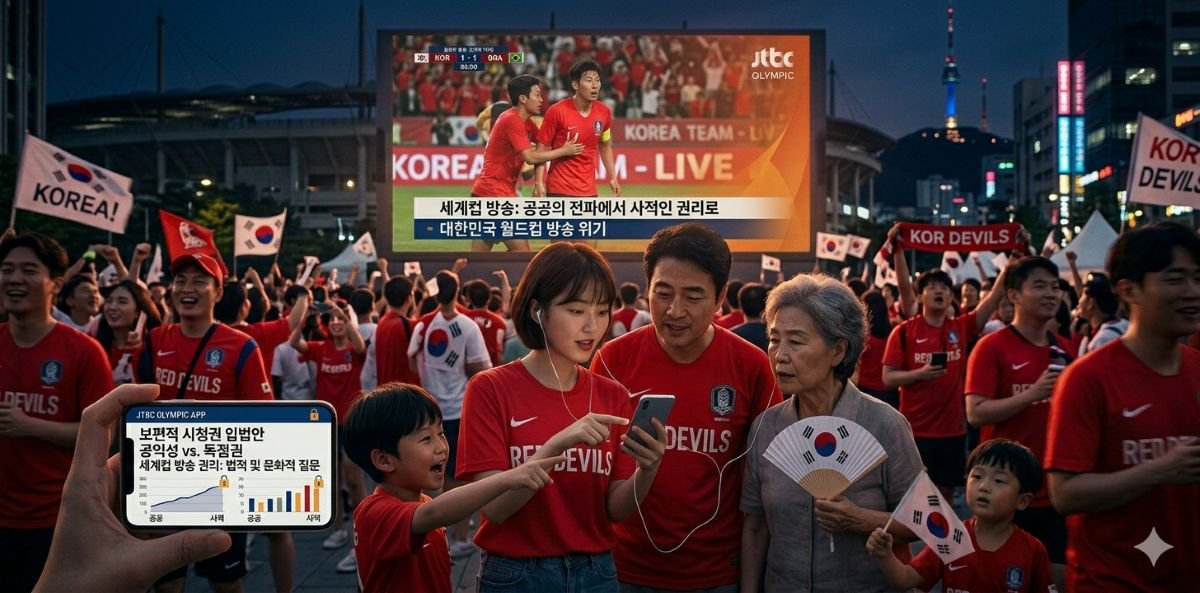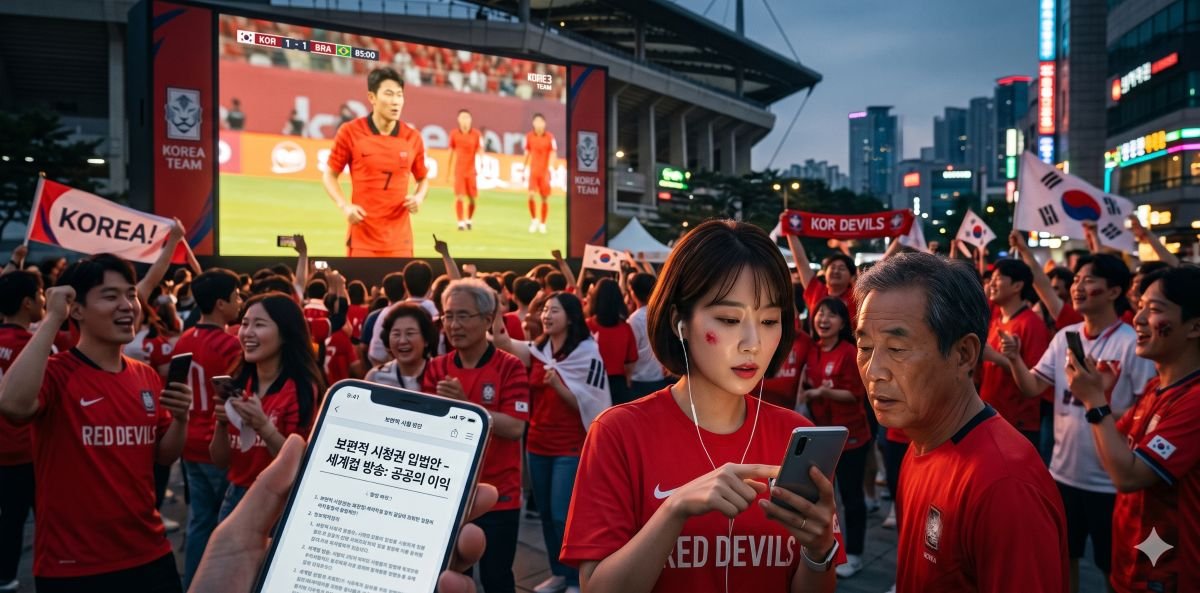

The 2026 Winter Olympics came and went in South Korea largely unnoticed by free-to-air audiences. That outcome was not accidental — it was the consequence of a structural shift in how major sports broadcasting rights are acquired and held in Korea. A live legislative debate is now underway about whether that shift can continue unchallenged, and the answer will determine whether South Korean viewers can watch the FIFA World Cup this June without paying for a subscription.
What Happened With the Winter Olympics
The Milano Cortina 2026 Winter Olympics ran from February 6 to February 22. For South Korean viewers accustomed to watching the Olympics on public television, something was different this time. JTBC, a cable broadcaster, held exclusive rights to the Games. No terrestrial broadcaster — not KBS, MBC, or SBS — aired the coverage. The opening ceremony drew a 1.8 percent viewership rating. Critics and lawmakers alike described it as the most ignored Olympics in South Korean broadcasting history, and notably the first Olympic Games in 62 years to air without any terrestrial broadcast coverage in the country.
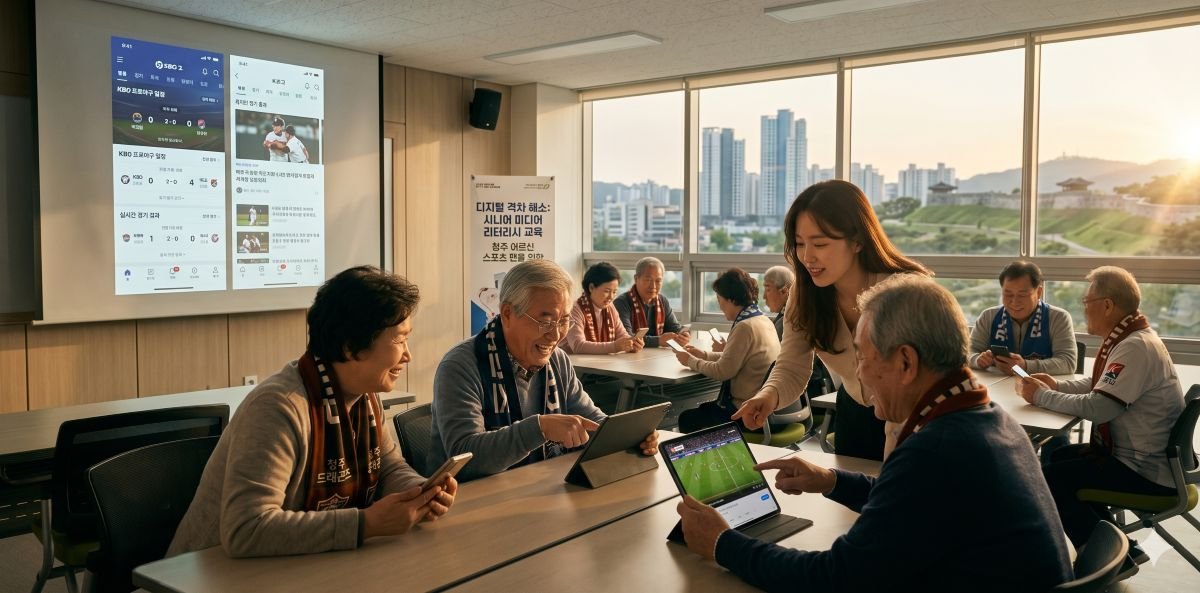
For residents of Cheongju and across North Chungcheong Province, the practical consequence was straightforward: watching the Winter Olympics required either a cable subscription that included JTBC or an OTT subscription to access the stream. Viewers without those subscriptions — including many elderly residents and lower-income households that rely on terrestrial broadcasting — were effectively excluded from watching a major international sporting event in real time.
How the System Got to This Point
Understanding the current situation requires understanding how the Korea Pool system worked and why it broke down.
For decades, major international sports broadcasting rights in South Korea were acquired through a consortium arrangement among the country’s terrestrial broadcasters — KBS, MBC, and SBS. This consortium, known as the Korea Pool, negotiated collectively with rights holders such as the International Olympic Committee and FIFA, distributing the cost and the broadcast obligations across the three public broadcasters. The result was that major events reliably appeared on free-to-air television, accessible to the entire population without any subscription requirement.
In 2019, JTBC made a decision that broke this model. Rather than participating in the Korea Pool consortium for the next rights cycle, JTBC submitted a solo bid and secured exclusive broadcasting rights to both the Summer and Winter Olympics from 2026 to 2032, as well as the FIFA World Cup from 2025 to 2030. The financial commitment involved was substantially higher than what the consortium had historically paid — which is precisely why the exclusive arrangement gave JTBC something the consortium model never could: complete control over distribution.
The terrestrial broadcasters were left without primary rights to events they had broadcast for generations. Their only option was to negotiate with JTBC for resale rights — at prices JTBC sets unilaterally.
The Financial Stakes for Public Broadcasters
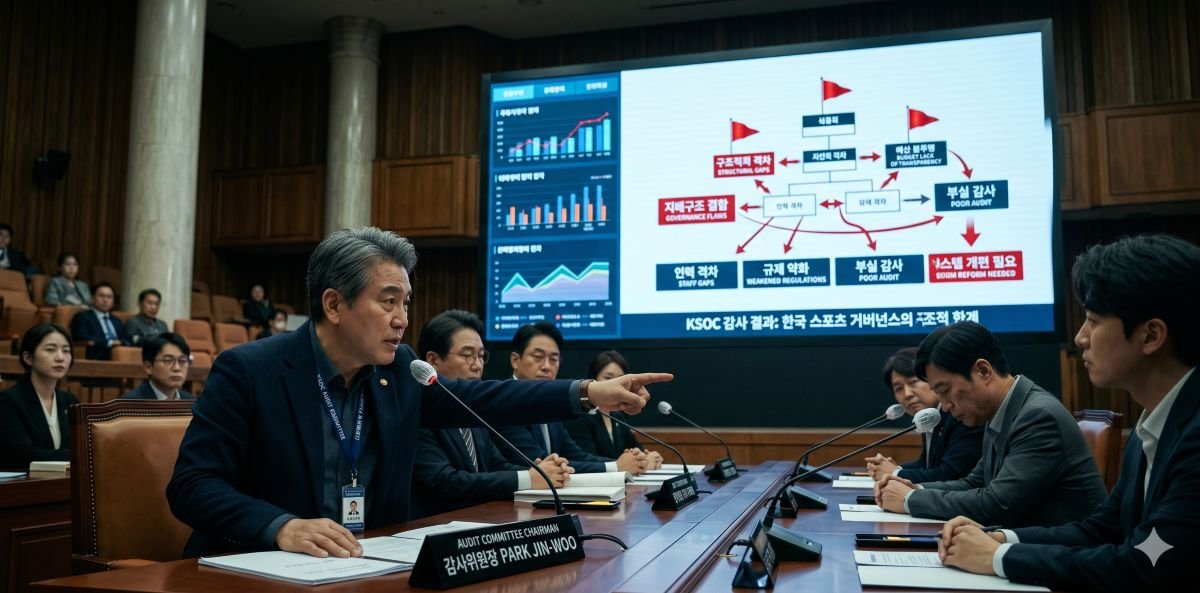
The Korea Broadcasting Association, representing KBS, MBC, and SBS, has been explicit about the financial consequences. The association warned that if the three terrestrial broadcasters accept the resale pricing being asked for rights to the 2026 FIFA World Cup, each broadcaster would incur net losses running into hundreds of billions of won per event. For broadcasters already managing nearly two decades of declining advertising revenue and rising production costs, those losses are not sustainable.
The association’s concern extends beyond individual events. If major sports rights are structurally inaccessible to public broadcasters — either because the primary rights sit with a private cable operator or because the resale prices produce guaranteed losses — the capacity of those broadcasters to fund public interest content more broadly is undermined. Sports broadcasting and public service journalism share the same revenue base. When one is damaged, the other follows.
The Legislative Response and International Comparisons
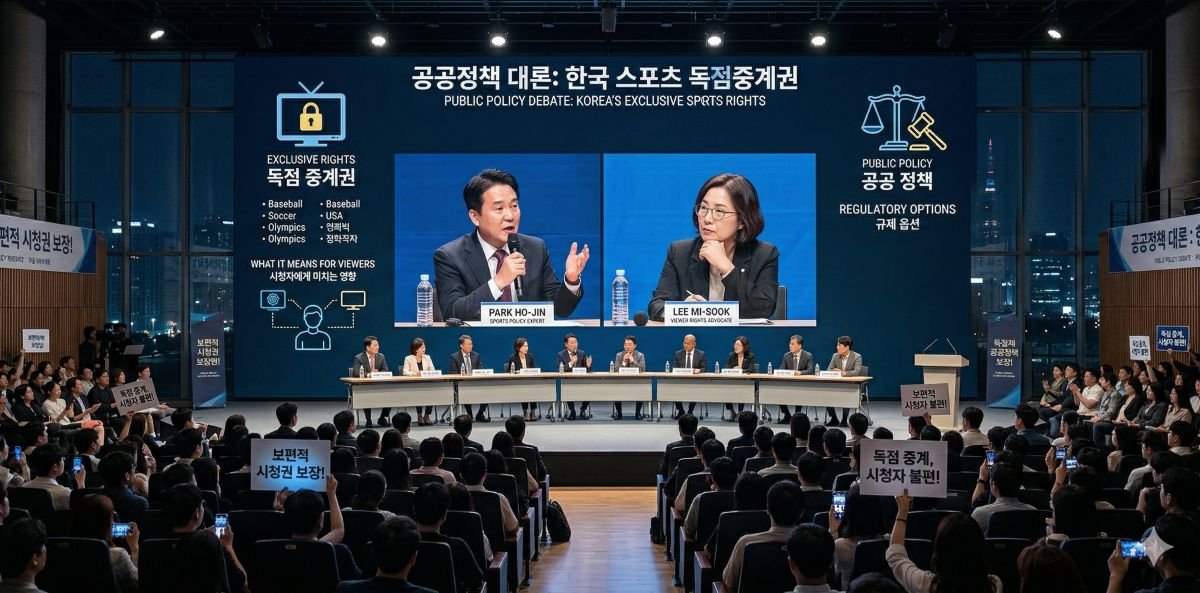
The political response came quickly after the Winter Olympics viewership figures emerged. Representative Cho Gye-won of the Democratic Party of Korea formally urged the Ministry of Culture, Sports and Tourism to redefine major international sports event broadcasting as a public good — a legal designation that would carry policy implications for how rights to such events can be held and exercised.
Cho specifically invoked two international regulatory models as templates worth examining.
The first is the United Kingdom’s Listed Events system. Under this framework, certain major sporting events are designated as national listed events, which means they cannot be broadcast exclusively on subscription channels. Events on the list — which includes the FIFA World Cup finals, the Olympic Games, and several other major competitions — must be available on free-to-air television accessible to the general public. The list is maintained by the government and updated periodically.
The second is Australia’s Anti-Siphoning system, which operates on a similar principle. Australian broadcasting law prevents subscription broadcasters from acquiring exclusive rights to listed major sporting events before free-to-air broadcasters have had the opportunity to acquire them. The system does not prohibit subscription broadcasters from carrying listed events — it prevents them from being the only outlet to carry them.
Both models share a common underlying legal argument: that certain sporting events carry sufficient cultural and civic significance that market logic alone cannot govern access to them. The right to watch events of national importance on free television is treated in both jurisdictions as a public interest concern that the regulatory framework has a responsibility to protect.
What “Public Good” Means in Legal Terms
The argument that sports broadcasting constitutes a public good has a specific meaning in regulatory and legal contexts that is worth understanding clearly.
A public good, in economic and legal terms, is something whose benefits are broadly shared and whose restriction from any portion of the population produces social costs that the market does not account for. Major international sporting events — particularly the FIFA World Cup in a football-passionate country and the Olympics — meet that definition in ways that most entertainment content does not. When a significant portion of the population is excluded from watching South Korea’s national team compete in a World Cup match due to subscription barriers, that exclusion has social dimensions that extend beyond consumer preference.
Cho also proposed expanding the Korea Pool consortium beyond its original three terrestrial members to include OTT platforms and new media outlets — a structural update that would reflect the changed broadcasting landscape without abandoning the consortium principle. Minister of Culture, Sports and Tourism Choi Hwi-young responded by indicating that the ministry would pursue discussions with the Korea Communications Commission about institutional safeguards.
The Immediate Stakes: The 2026 FIFA World Cup
For viewers in Cheongju and across Chungcheongbuk-do, the legislative debate has a specific and near-term consequence. South Korea is scheduled to play its first FIFA World Cup group stage match on June 11, facing Czechia in Guadalajara. The question of whether that match — and the subsequent games against Mexico and South Africa — can be watched on a free-to-air channel or requires a paid subscription will be determined by the outcome of the current rights and policy negotiation.
How regulation shapes what content audiences can access and under what conditions is one of the foundational questions in media policy. For analytical context on how legal structures govern user behavior in content markets, How Real-Time Data Feeds Power Live Sports Score Platforms provides useful context on how infrastructure and access interact in sports media. For deeper framing on how legal models govern sports broadcasting rights and accessibility, 스포츠 베팅 규제의 법적 모델 offers structural context on how regulatory frameworks balance access, risk, and oversight in sports content markets.
The Korea Pool system worked for decades because it aligned commercial interests with public access through a cooperative structure. When that alignment broke down, the public access dimension did not simply diminish — it disappeared for an entire generation of Korean viewers watching the Winter Olympics. The current legislative effort is an attempt to restore that alignment through formal law rather than voluntary cooperation. Whether it succeeds will shape how Korea’s most significant sporting moments are experienced for years to come.