

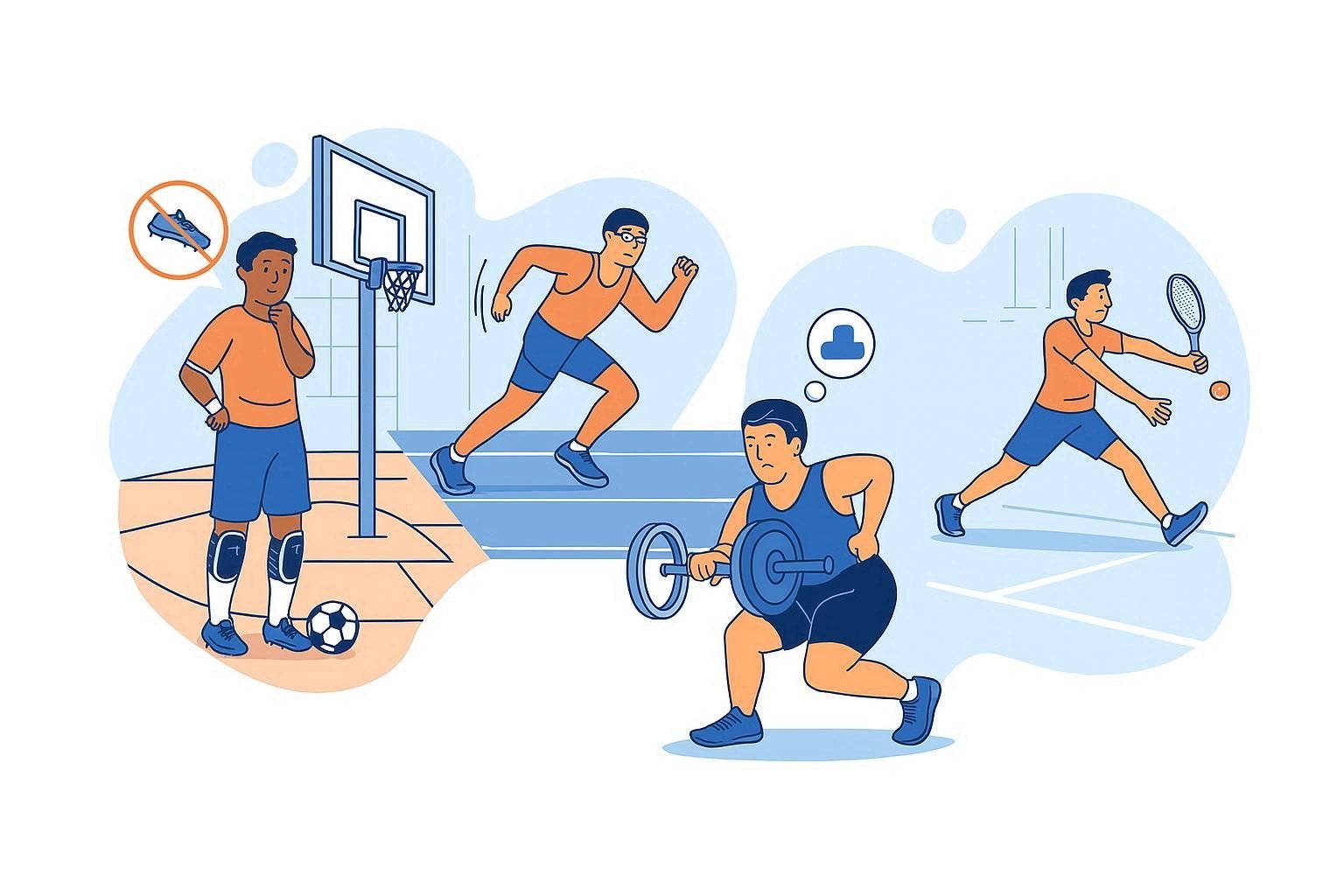
Picking up a new sport feels straightforward until it does not. The rules seem logical enough on paper, the basic mechanics look familiar, and the pace of play looks manageable from the sideline or the broadcast. Then the first few weeks arrive, and the assumptions start to crack. Movements that worked in one sport slow down progress in another. Strategies that felt instinctive become liabilities. Concepts that appeared interchangeable turn out to be fundamentally different.
This experience is more common than most people acknowledge. Transitioning between sports carries a specific set of challenges that go beyond physical conditioning or technical skill. Much of what makes the shift difficult is cognitive — built-in expectations about how competition works, what good form looks like, and how progress is measured. These expectations are rarely examined until they start causing problems.
Understanding the most common misunderstandings that emerge during a sport transition makes the learning curve shorter, less frustrating, and ultimately more rewarding.
Assuming Transferable Fitness Means Transferable Readiness
One of the first misjudgments new practitioners make is believing that cardiovascular fitness from one sport translates cleanly to another. A seasoned distance runner who picks up football often expects to handle the physical demands with relative ease. A competitive swimmer moving to tennis assumes that upper body strength will carry over. This logic is partially correct, but only partially.
Different sports develop different movement patterns, energy systems, and muscle groups. Endurance running builds aerobic base but does not train the explosive lateral movement that court sports demand. Swimming develops pulling strength but rarely prepares the rotational core mechanics needed for racket sports. When someone arrives at a new discipline assuming their existing fitness is a substantial head start, they often find themselves gassing out in unexpected ways, nursing unfamiliar soreness, or discovering that their reflexes are calibrated to the wrong stimulus entirely.
The smarter approach is to treat existing fitness as a foundation — genuinely useful but not directly applicable without recalibration.
Mistaking Rule Familiarity for Game Understanding
Reading a rulebook is not the same as understanding a sport. Most switchers know this in principle but underestimate how wide the gap actually is in practice. Rules describe legal actions. They say nothing about why those actions are taken, when they become tactically significant, or how the best practitioners sequence them across a full game.
Someone moving from basketball to volleyball, for example, might quickly absorb the rotation rules and scoring system. But recognizing when a setter is reading the block, or why a team shifts its defensive positioning mid-rally, requires a different kind of knowledge that only comes from repeated exposure. The rules give the syntax; the game sense gives the grammar. Confusing the two is one of the most reliable sources of early frustration.
Comparing Timelines Across Sports
Progress in sport is rarely linear, and it is almost never comparable across disciplines. Yet switchers frequently measure their development against how quickly they improved in their original sport, or against the perceived difficulty of the new one based on how it looks from the outside.
A sport that appears simple to spectators — golf, for instance, or darts — can require years of deliberate practice before technique becomes stable. Sports that look physically demanding, like wrestling or rowing, often have steep technical learning curves that the physical intensity obscures. The internal timeline a person carries from their previous sport becomes a source of false benchmarks. Moving to a new discipline means accepting that past experience with rapid improvement does not guarantee the same pace will hold.
For a more detailed look at how these dynamics play out specifically in sports where rules and formats differ significantly between codes, Cheongju Insider’s piece on common misunderstandings when switching sports offers a useful breakdown of the recurring gaps between expectation and reality.
Carrying Over Tactical Assumptions
Every sport has embedded strategic logic that players internalize over time. A football player learns to protect the ball, draw contact, and use the body as a shield. A baseball batter learns patience, pitch sequencing, and the discipline of waiting for the right location. These tactical instincts are not wrong in their original context. But they can become active liabilities when applied to a different competitive environment.
A footballer moving to futsal might over-dribble in spaces that demand quick release passing. A tennis player moving to squash might gravitate toward the middle of the court out of habit, not realizing that court geometry and angles work differently against four walls. The challenge is not unlearning the old sport — the habits are too deeply ingrained for that to be realistic in the short term. The challenge is learning to identify when the old instinct is being triggered and whether it is appropriate to the current situation.
Underestimating the Social and Cultural Adjustment
Beyond the physical and tactical, sports carry their own cultures, vocabularies, and unspoken norms. Knowing when to celebrate a point and when restraint is expected, how to interact with officials, how warm-up protocols unfold, when recreational play versus competitive play carries different behavioural standards — these are invisible until they are not.
New participants in a sport often receive social feedback before they receive technical feedback. Arriving with the wrong posture — not physical posture but social posture — can create friction in a team environment that slows the whole adaptation process. This layer of adjustment is rarely discussed in skill development guides, but it shapes the experience of switching sports more than most people expect. As explored in broader analyses of how rule differences shape athlete behaviour and market responses across disciplines, the structural gap between sports extends well beyond the rulebook into culture, tempo, and social dynamics.
Expecting Immediate Competency
The final and perhaps most pervasive misunderstanding is the assumption that adult learners with athletic backgrounds should reach functional competency quickly. This expectation is understandable. Previous sport experience does build general athleticism, body awareness, and competitive temperament. But it also creates a gap between what someone feels they should be able to do and what they are currently capable of. That gap is uncomfortable.
The most effective switchers are those who treat the early period of a new sport as a genuine beginner phase — not as a temporary setback before existing ability kicks in, but as a legitimate stage of development that requires patience, repetition, and honest self-assessment. Progress tends to arrive faster once the expectation of fast progress is let go.
Switching sports is one of the more underrated ways to develop as an athlete and as a competitor. The difficulties that come with it are not obstacles to that development. They are the development itself.