
South Korea has produced some of the world’s most decorated athletes. The infrastructure behind that achievement — a system that identified talented young people early, separated them from regular schooling, and concentrated their development on athletic performance — was for decades considered a national asset. In April 2026, a Korea Herald report brought renewed attention to the fact that this infrastructure is under significant strain, and that the policy debate intended to reform it remains unresolved six years after the most significant legal revision the system has seen.
The question at the center of the debate is not whether student athletes should study. Almost no one in the conversation argues against education in principle. The dispute is over how much, when, and what happens to elite sports development if the answer is set too high.
What the System Has Always Been, and What Changed in 2020
Korea’s student athlete system, known as the 체육특기자 (sports prodigy) system, has roots stretching back to the 1960s and 1970s, when the national sports development agenda was explicitly tied to state prestige. Under that model, talented young people were streamed into elite athletic pathways at middle school or high school age. In practice, this meant dramatically reduced class attendance — sometimes near-total exemption from regular education — and a training environment that prioritized competitive output above all else.
The National Sports Promotion Act, the foundational legislation governing this system, was revised in 2020 in a meaningful way. Before the revision, its opening article described the purpose of the law as promoting fitness and contributing to national prestige through sports. After the revision, the language shifted: the law now states that its purposes include protecting the human rights of sportspeople based on fair sportsmanship and contributing to the realization of a healthy community by enhancing the happiness and pride of the people.
This revision was not incidental. It came in the wake of intensifying pressure from multiple directions: the National Human Rights Commission of Korea had called for systemic reform as early as 2007, and the #MeToo movement in Korean sports, combined with the death of triathlete Choi Suk-hyeon in 2020 — whose case exposed serious abuses within the closed training environment — created the conditions for legislative action. The 2020 revision was an acknowledgment that the old model had produced not only champions but also systemic harm.
Why the Debate Has Intensified Rather Than Settled
Six years after that revision, the Korea Herald’s April 2026 report found that the debate has not resolved — it has sharpened. Participation in school sports is declining, which some in the athletic community attribute directly to the strengthened academic requirements. The argument from coaches, sports associations, and some parents is that asking young athletes to meet standard academic benchmarks during the same years when their peers in other countries are training full-time creates an asymmetry in international competition. Elite development, under this view, requires early and intensive specialization, and the revised policy undermines that.
On the other side, civic groups and education advocates argue that easing academic requirements risks reversing progress that was achieved at significant human cost. The countervailing concern is not abstract: research has long shown that only a small fraction of student athletes — estimates have historically placed this at roughly 2.5% of middle and high school athletes — develop professional careers. The majority of students who go through elite training programs without maintaining educational development face limited options after sport.
The Middle School Stage as a Particular Pressure Point
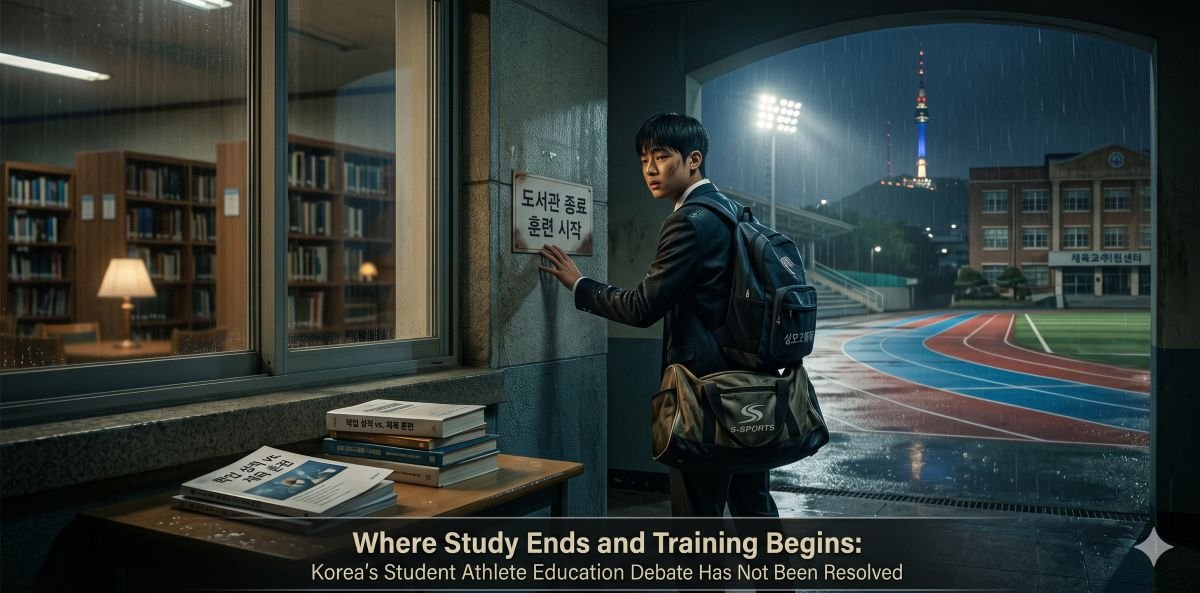
The debate carries specific weight at the middle school level. Middle school education in Korea is compulsory, and the three years of secondary education from grades 7 to 9 represent the period during which students are meant to develop foundational academic skills and explore career options. The government has introduced mechanisms like the Free Semester System to reduce exam pressure during this stage, but student athletes in elite training programs have often operated largely outside that curricular framework.
The problem is that middle school is also the developmental window that sports associations identify as critical for athletic formation in many disciplines. The conflict between compulsory education obligations and elite development timelines is most acute precisely at this stage — and the current policy environment has not resolved how those obligations should be balanced.
As examined in the policy debate over student athlete education in Korea and what it reveals about sports governance, the question extends beyond individual student welfare into the structural design of how Korea produces athletes and what responsibilities institutions bear for those who do not reach professional competition.
What Remains Unresolved
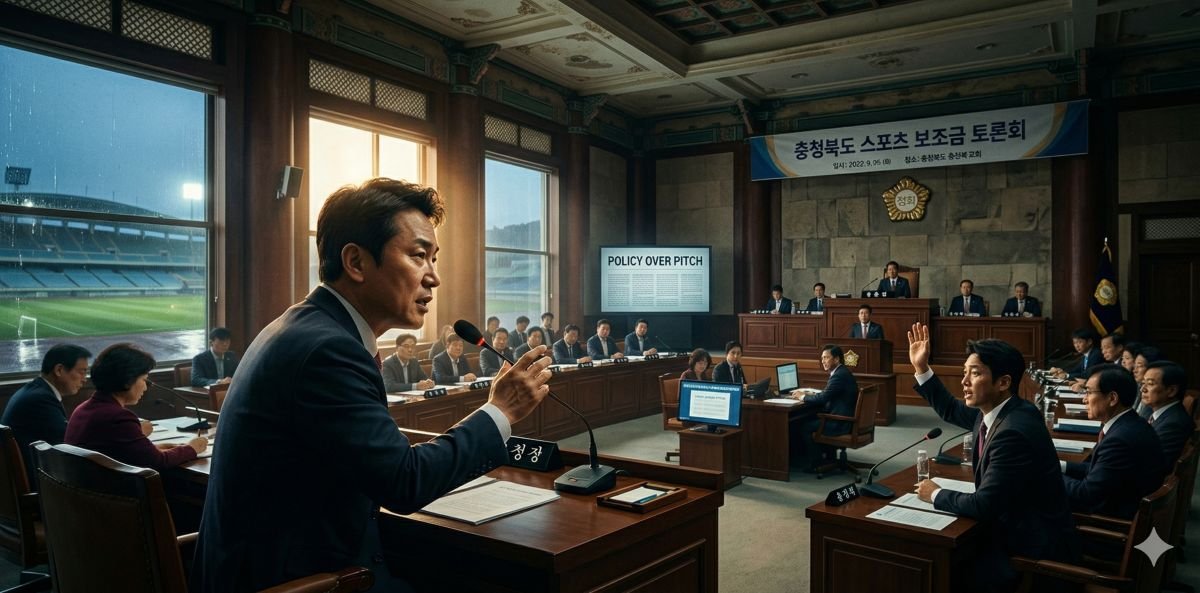
The Korea Herald’s reporting makes clear that the government has not produced a clear forward policy. President Lee Jae Myung had raised the issue of reviewing policies that constrain elite sports development during his 2022 campaign, but the question has received limited follow-through. The absence of policy direction has left school sports programs, coaches, families, and student athletes in an environment of ongoing uncertainty — not knowing whether current requirements will tighten, ease, or remain static.
For families in Cheongju and the broader Chungcheongbuk-do region, this is not a national policy abstraction. Chungcheongbuk-do operates its own network of middle school and high school sports programs under the national framework. Parents whose children have athletic talent face a genuine and unresolved question: what the system they are entering actually expects of their child, and what that child’s options will look like if sport does not lead where they hope.
The 2020 revision to the National Sports Promotion Act changed the stated purpose of the law. It did not resolve how that changed purpose translates into daily decisions for the educators, coaches, and families navigating the system it governs.