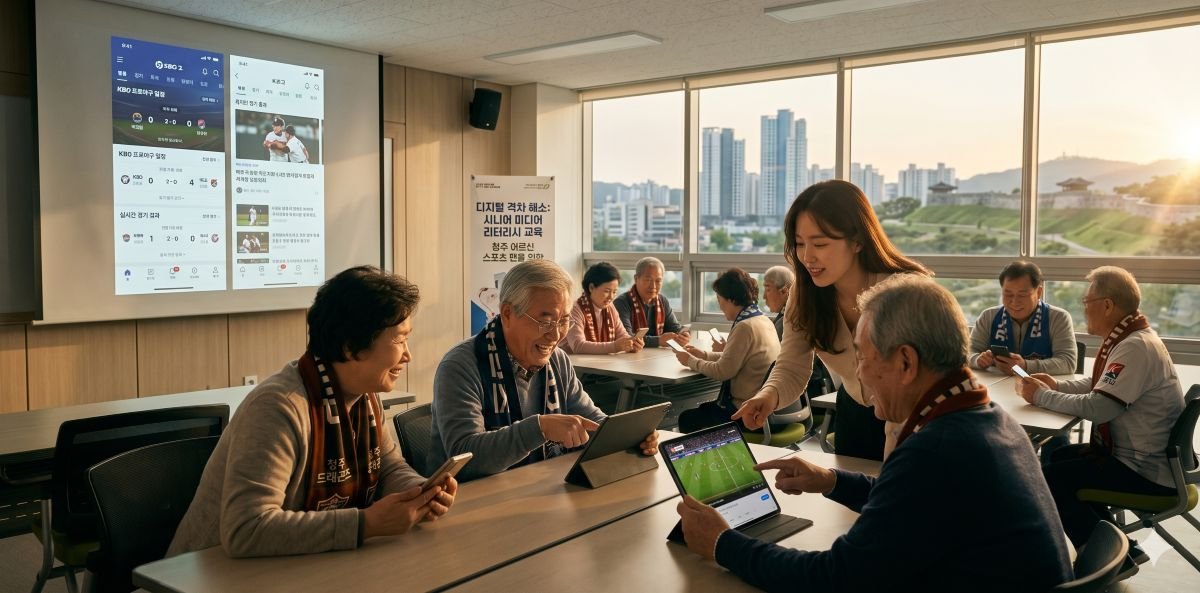

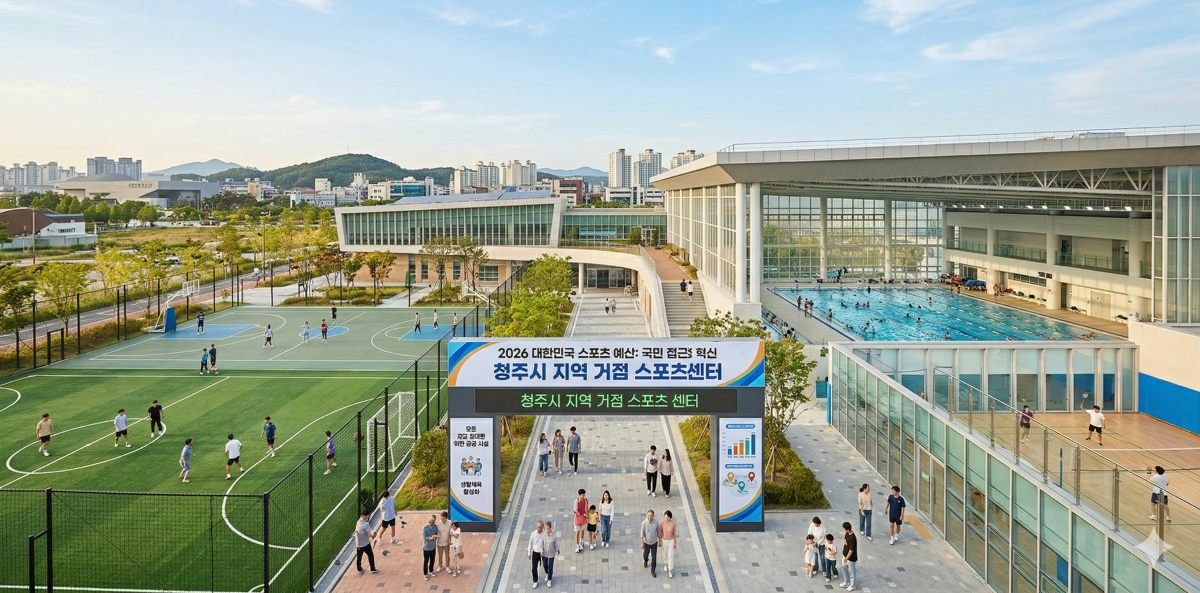
South Korea’s Ministry of Culture, Sports and Tourism finalized its 2026 sports sector budget at 1.7 trillion won, directing funding toward upgrading public sports facilities, introducing new programs tailored to senior citizens, training reserve national athletes, supporting employment stability for sports professionals, and expanding financial resources for the sports industry. For Cheongju residents who use civic sports infrastructure daily — from the Cheongju Sports Complex to community athletics programs — understanding how national policy decisions translate into local facility investment is directly relevant.
How the 2026 Sports Budget Is Structured
The Ministry of Culture, Sports and Tourism announced that its 2026 budget has been finalized at 7.85 trillion won, an 11.2 percent increase from 2025. The sports sector will see a more modest increase, with the 2026 budget set at 1.7 trillion won, 24.8 billion won above this year’s. Funding will be directed toward upgrading public sports facilities, introducing new programs tailored to senior citizens, training reserve national athletes, supporting employment stability for sports professionals, and expanding financial resources for the sports industry.
The specific line items within the sports allocation reveal where the ministry is prioritising reform. The sports sector budget includes 95.3 billion won for renovation and repair of public sports facilities — an increase of 29.4 billion won from the previous year — 7.5 billion won for new sports programs supporting senior citizens, 8.8 billion won for job stability support for athletes, and 288.4 billion won in sports industry financial support.
A 30 percent increase in public facility renovation funding is not a minor adjustment. It signals a deliberate policy choice to prioritise maintenance and accessibility of existing infrastructure over headline-generating new construction — a direction that has practical implications for regional cities where aging facilities are a persistent challenge.
What the Policy Direction Signals
The broader 2026 ministry strategy frames the sports budget within a vision the government calls the “K-Culture 300 trillion won era.” But the sports allocations reflect a distinct strand of that vision: one oriented toward public health, regional equity, and everyday participation rather than elite spectacle.
The 2026 ministry strategy sets out “trusted sports and a healthy populace” as one of its four main tasks. Other measures include the expansion of branches of the National Fitness Certification Center, nationwide sports centers, and customised programs by age to stimulate recreational sports.
Measures were taken to create a culture of voluntary participation in sports activities, including the expansion of the scope of cultural expense tax deductions to include the costs of using everyday sports facilities such as swimming pools and fitness centres. This means residents who pay to use public pools or fitness facilities may now access tax relief on those expenses — a change that reduces the financial barrier to regular participation for working households.
The focus on senior citizens is particularly significant given Korea’s demographic trajectory. A newly created 7.5 billion won program specifically targeting sports participation for older adults represents an acknowledgment that the public health case for active ageing requires dedicated policy infrastructure, not just generic programming.
The Korean Sport and Olympic Committee finalized its own 2026 budget at 345.1 billion won, a 23.4 percent increase from the previous year. A total of 12 programs worth 63 billion won were transferred to the KSOC to strengthen the connection between recreational and elite sports, including 27.4 billion won for sports club divisions, 17.2 billion won for regional sports promotion, and 8 billion won for strategic sports development. The 17.2 billion won specifically designated for regional sports promotion represents a structural commitment to distributing investment beyond the Seoul metropolitan area.
What This Means for Cheongju
Cheongju is not a peripheral city in the Korean sports landscape. The Cheongju Sports Complex, opened in 1965 and significantly expanded in 1979, includes a main stadium with a seating capacity of 16,280, a baseball field, indoor gymnasium, swimming pool, and athlete dormitories. In recent years, Cheongju City has invested in upgrades including a full replacement of the main stadium’s grass turf with an 800 million won budget, set for completion by April 2025, to improve playing conditions and safety.
The complex serves as home to Chungbuk Cheongju FC in K League 2 and hosts a range of community athletics programs throughout the year. Its swimming pool and athletics track are used by residents daily, making it one of the most actively utilised pieces of public sports infrastructure in Chungcheongbuk-do. The national budget’s 95.3 billion won allocation for public facility renovation creates a funding environment in which municipal governments like Cheongju can apply for central government support to address maintenance backlogs.
Chungbuk Province is pursuing longer-term sports infrastructure ambitions as well, including plans for a multipurpose dome stadium in the Osong area of Cheongju — positioned as a transportation hub connecting to KTX Osong Station and Cheongju International Airport. The province plans to pursue this through a two-track strategy, seeking alignment with the Ministry of Culture, Sports and Tourism’s national-level dome stadium study plan.
The convergence of national budget priorities and local ambition creates a meaningful moment for Cheongju. The 2026 sports budget’s emphasis on regional sports promotion, public facility investment, and broad participation programming aligns directly with the infrastructure profile of a city that has historically sat outside the primary metropolitan funding corridor.
For Cheongju residents interested in how policy frameworks and structured systems shape the distribution of public resources across regions, cheongjuinsider.com has a relevant examination of how transparent governance and oversight systems affect outcomes in regulated environments.
The Structural Question for Regional Cities
The 2026 sports budget’s orientation toward public access is meaningful, but the mechanism by which national allocations reach regional cities matters as much as the total figures. Culture Minister Chae Hwi-young stated that the government would prioritise making better use of existing facilities rather than focusing on building new infrastructure, noting that content matters more than construction and that much more can be achieved by upgrading and better utilising what is already in place.
That philosophy, if applied consistently, works in the interest of regional cities like Cheongju where existing facilities are structurally sound but require sustained maintenance investment. The risk is always that national budget priorities drift toward flagship projects in major metropolitan areas. The explicit regional sports promotion allocation within the KSOC budget — alongside the ministry’s stated goal of dispersing cultural and sports investment beyond the Seoul corridor — suggests that this administration is at least structurally committed to a more geographically distributed approach. For more context on how policy structures and governance instruments shape the conditions under which regional investment decisions are made, daejeoninsider.com has examined how regulation evolves over time in response to structural and demographic change.
Whether that commitment translates into meaningful facility upgrades and program expansion for Cheongju residents will depend on how effectively local government engages with the national funding channels the 2026 budget has opened. The policy framework is in place. The execution is the next question.