
In early March 2026, South Korea’s Board of Audit and Inspection released the findings of a comprehensive audit of the Korean Sport and Olympic Committee — the country’s national umbrella sports body. The results were not a minor administrative critique. They described a governance structure that had failed at multiple levels simultaneously, and raised questions that extend well beyond the KSOC itself into how regional sports organizations across the country operate under its umbrella.
What the Audit Found
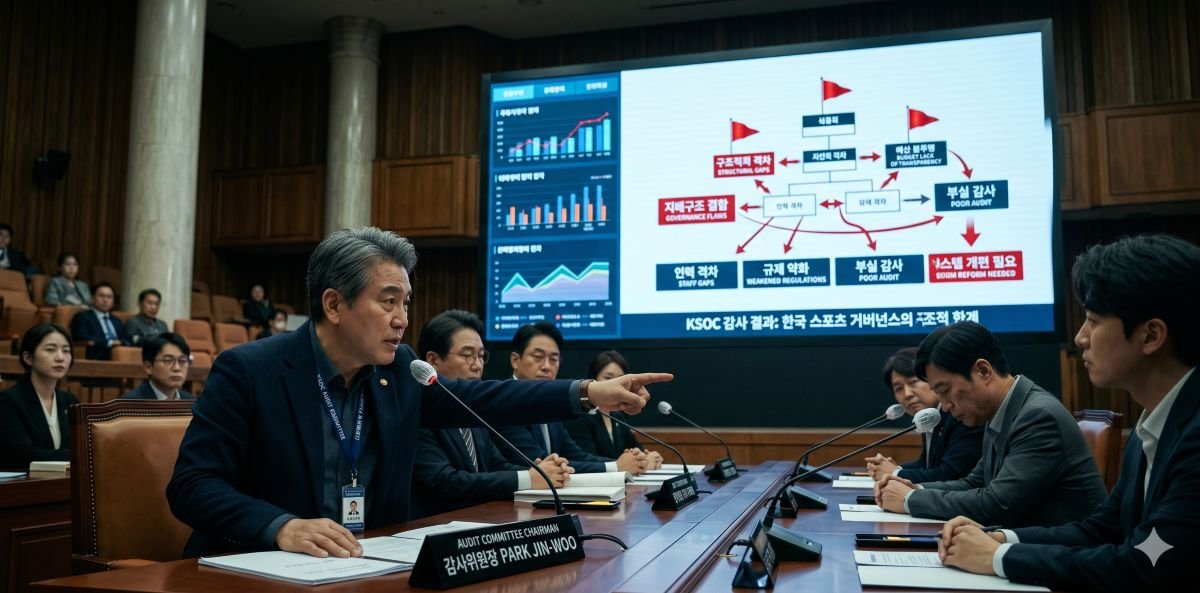
The Board of Audit and Inspection conducted its review targeting the KSOC, the Ministry of Culture, Sports and Tourism, and the Korea Sports Ethics Center. The findings, announced on March 4, covered failures across athlete protection, national team selection integrity, oversight of sports federations, and internal governance.
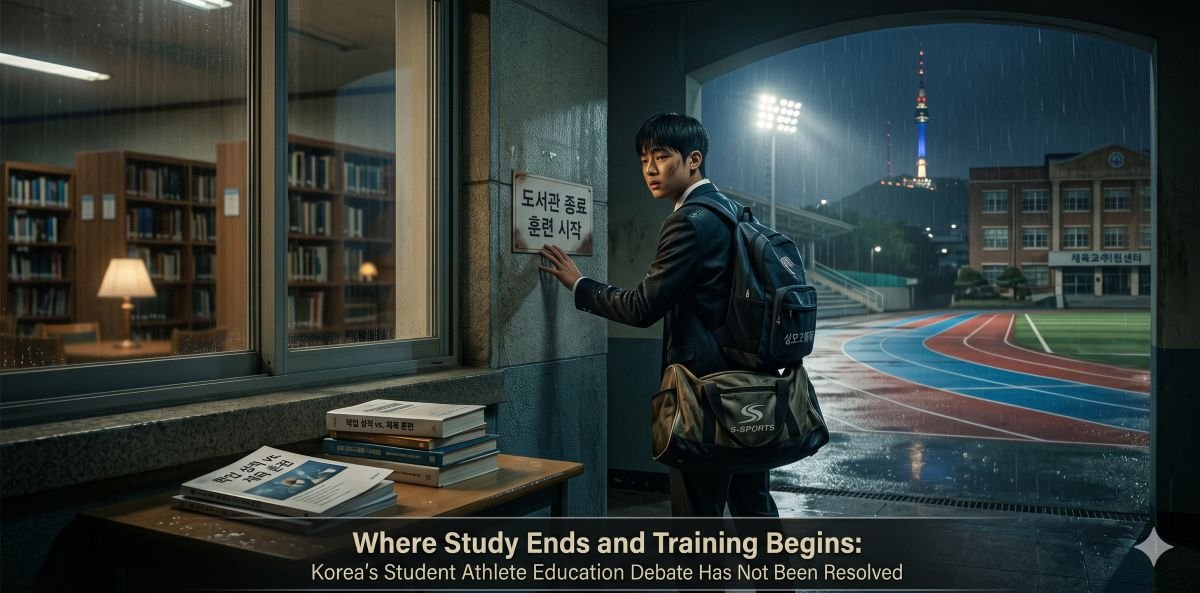
The most immediately striking finding concerned coaching qualifications. The audit revealed that 222 individuals whose sports instructor licenses had been revoked due to crimes including assault and sexual violence were still actively working as coaches at schools and sports facilities across the country. The Ministry of Culture, Sports and Tourism had instructed the KSOC as far back as 2020 to require only licensed coaches — whose credentials are subject to regular criminal record checks — to work in the field. The KSOC delayed implementing that requirement, citing the time needed for coaches to obtain licenses. The result was a four-year window during which disqualified individuals continued operating in coaching roles.
Eight coaches who had been permanently disqualified or suspended for at least one year by the Korea Sports Association for the Disabled also managed to register with the KSOC before their disciplinary periods ended.
Selection Integrity and Conflict of Interest
Beyond the coaching qualification failures, the audit documented recurring problems in national team selection processes. From 2022 to 2024, 70 board members and performance improvement committee members from 29 sports federations — individuals directly responsible for designing selection criteria and evaluating candidates for national team coaching positions — applied for and were appointed to those very positions while retaining their committee roles. The KSOC overlooked these conflicts of interest throughout.
During the same period, 24 formal complaints were filed regarding national team player selection processes. All were dismissed. Thirteen were not even reported to the KSOC as required under its own rules, meaning they were resolved — or buried — at the federation level without independent review.
The audit also found that the KSOC failed to cross-reference its own athlete records with the Korea Sports Ethics Center’s database on school violence, allowing 152 athletes with school violence records from 29 federations to compete in tournaments between August 2022 and the end of 2024 without restrictions.
The Core Governance Failure
The Board of Audit and Inspection’s conclusion was direct. The fundamental problem was the failure of the KSOC’s governance structure. Despite receiving more than 400 billion won in government funding annually as a quasi-public institution, the organization operated without effective external oversight or functioning internal checks and balances.
Former KSOC President Lee Kee-heung was identified as a central figure in this breakdown. The audit found that he composed the board of directors through personal and campaign staff recommendations rather than through legitimate processes, meaning only 18 of 47 board members were affiliated with Olympic sports federations — well below the majority required by the organization’s own articles. The Sports Fairness Committee, which is supposed to review exceptions to executive reappointments, was similarly stacked with individuals selected without competitive process.
The KSOC was ordered to address ineligible coaches, strengthen national team selection fairness, introduce a standing auditor system, and ensure the independence of internal audit bodies. The Ministry of Culture, Sports and Tourism was instructed to exercise its supervisory functions properly.
What This Means for Regional Sports Bodies
For those following sports governance in Cheongju and North Chungcheong Province, the KSOC audit carries direct relevance. The Chungcheongbuk-do Sports Council operates as a regional affiliate within the KSOC’s administrative structure, receiving allocated funding and operating under frameworks set at the national level. Governance failures at the top of that structure — particularly around coaching qualification enforcement and federation oversight — do not stay contained at the national level. They shape the standards, or absence of standards, that filter down into provincial and municipal sports administration.
The broader question the audit raises is not unique to the KSOC. It is a question about what accountability looks like in quasi-public institutions that receive substantial government funding but operate with significant internal autonomy. For context on how Korea’s sports policy framework has been addressing athlete rights and institutional reform over recent years, the analysis at Cheongju Insider on Korea’s 2026 sports budget and what it signals for regional cities offers useful connective context on how national policy decisions reach communities at the regional level.
Governance audits of this kind rarely produce immediate transformation. But they create a documented record of specific failures — and in doing so, establish the baseline against which future accountability can be measured.
For broader analytical context on how institutional transparency and rule formalization develop over time in complex governance systems, 시스템 운영의 공식화와 규칙 투명성의 구조적 진화 provides relevant structural framing on why formal oversight mechanisms matter and how they tend to evolve in response to documented failures.