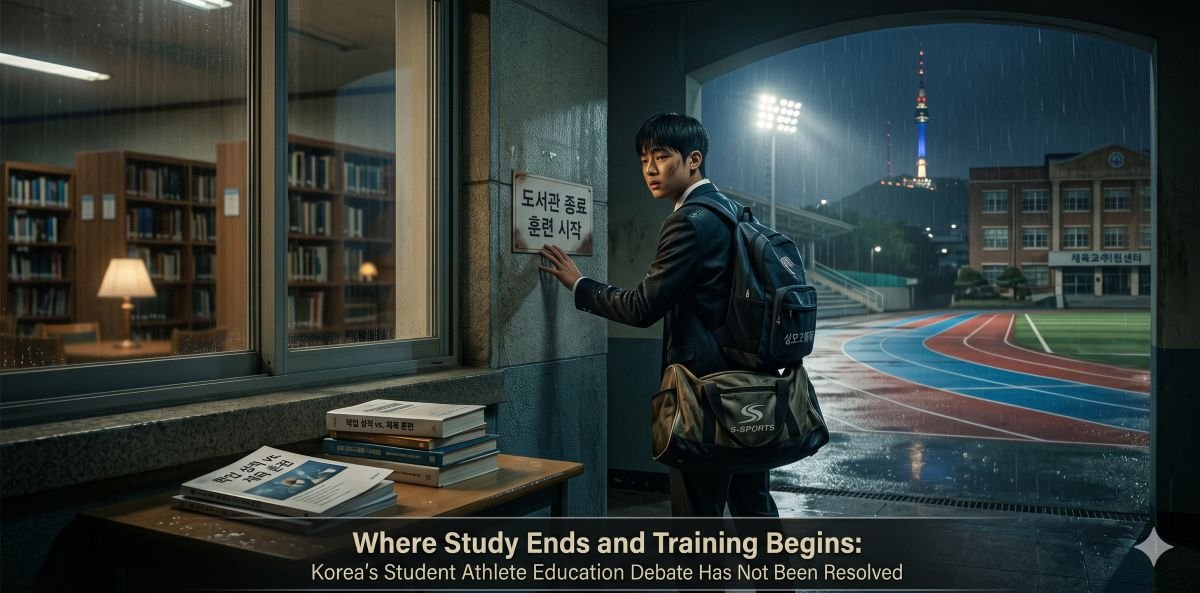

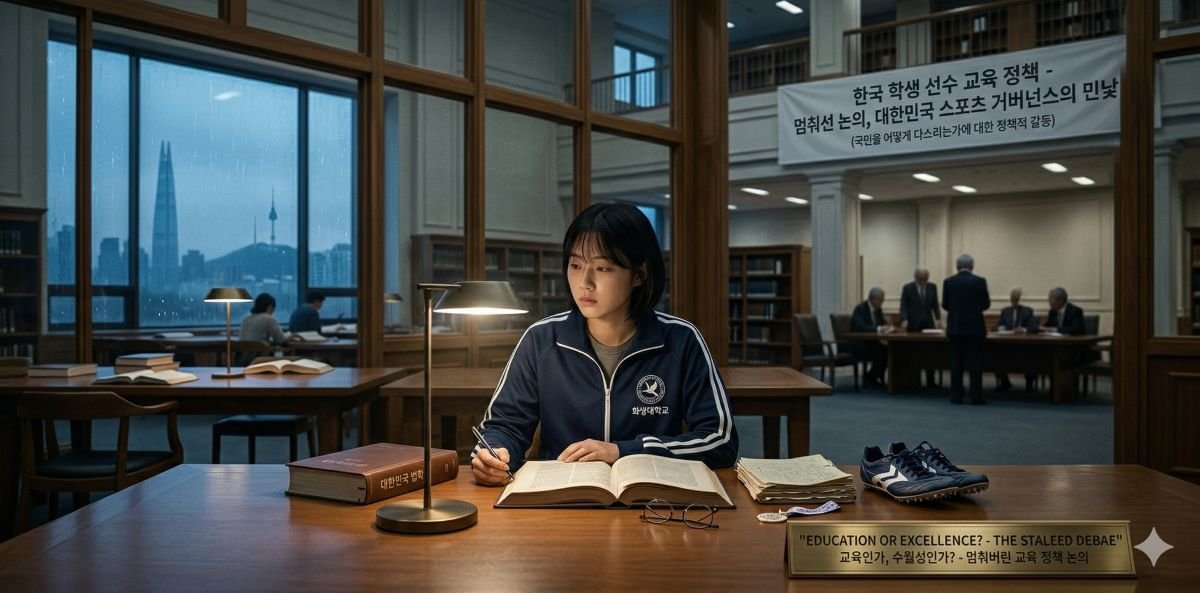
South Korea has spent nearly two decades arguing about what it owes its student athletes. The question sounds simple: should young people who train seriously for sport also be required to attend school and meet academic standards? The answer, it turns out, touches nearly every tension in Korean sports culture — between performance and welfare, between institutional interest and individual rights, between the country’s elite athletic ambitions and its obligations to the young people who carry them.
As of April 2026, the government has no clear answer. The debate is intensifying, school sports participation is declining, and the two ministries most responsible for finding a resolution are still negotiating a direction that neither has yet committed to.
How the Current System Was Built
South Korea’s sports development model was designed around a single priority: producing elite athletes capable of representing the country at the highest international level. Talented young people were identified early, placed in intensive training programs, and supported through institutional arrangements that frequently included reduced classroom hours and university admission pathways based on athletic performance rather than academic standing.
The system worked, by its own narrow measure. It produced Olympic medalists, World Cup squads, and athletes who elevated Korea’s global sporting profile across multiple disciplines. What it did not produce, critics argued, was a generation of young athletes with meaningful options beyond sport itself.
The National Human Rights Commission of Korea raised this concern formally in 2007, urging a structural shift away from the elite-centered model. The call went largely unanswered until the sports landscape was shaken by a series of high-profile cases. The #MeToo movement in Korean sport revealed patterns of abuse within closed training environments. The death of triathlete Choi Suk-hyeon in 2020 — attributed to sustained abuse by a coach and teammates — brought the human cost of institutional isolation into unavoidable public view.
These events drove a set of policy changes that tightened academic requirements for student athletes, requiring them to maintain a baseline level of classroom participation as a condition of competition eligibility. The intention was to break down the closed-environment model and ensure that young athletes could not be entirely severed from educational life.
Where the Dispute Now Stands
That policy is now itself under pressure. Sports organizations argue that the academic thresholds are too rigid and impose requirements that do not reflect the practical realities of a competitive training schedule. The Athletes’ Commission of the Korean Sport and Olympic Committee reported earlier this year that 3,187 middle school students were barred from competitions after falling short of academic standards in a single semester — a figure the commission described as discriminatory and as evidence that the policy stigmatizes athletes rather than protecting them.
Civic groups hold the opposing view with equal conviction. They argue that relaxing academic requirements risks reversing a decade of progress, and that the problems exposed by cases like Choi Suk-hyeon’s were not accidental but structural — the direct product of a system that isolated athletes from ordinary institutional life and left them with no external reference points or protections. Weakening the academic requirement, they contend, reopens that same structural vulnerability.
Neither side is wrong in its diagnosis of a real problem. Student athletes do face genuine scheduling pressure. And the conditions that enabled abuse in Korean sports were inseparable from the degree to which young athletes were removed from normal social environments. The difficulty is that both concerns point to different remedies, and the government has so far declined to choose between them.
Understanding how legal frameworks shape behavior within institutions — and why the structure of a system matters as much as its stated intentions — offers useful context for following this dispute. This analysis from Busan Insider examines precisely that dynamic.
What This Means for Chungcheongbuk-do
The policy vacuum carries direct consequences for regions with established athletic development pipelines. Chungcheongbuk-do — and Cheongju in particular, as the provincial capital — has long contributed athletes to national programs across multiple sports. The province hosts training facilities, school programs, and pathways that feed into national-level competition structures.
The question of what academic requirements apply to young athletes in those programs, and how institutions are expected to balance training demand against educational access, is not abstract for Cheongju. It is a governance question that reaches into local schools, regional sports associations, and the daily decisions made by coaches, administrators, and families navigating a system that has not yet resolved its own internal contradictions.
Sports Minister Chae Hwi-young stated during his confirmation hearings that the ministry would enter discussions with the Education Ministry on revisions. Education Minister Choi Kyo-jin has acknowledged the need to balance academic and athletic development. But no concrete policy direction has emerged from either ministry, and the mechanisms for how young athletes in provinces like Chungcheongbuk-do should be governed in the interim remain undefined.
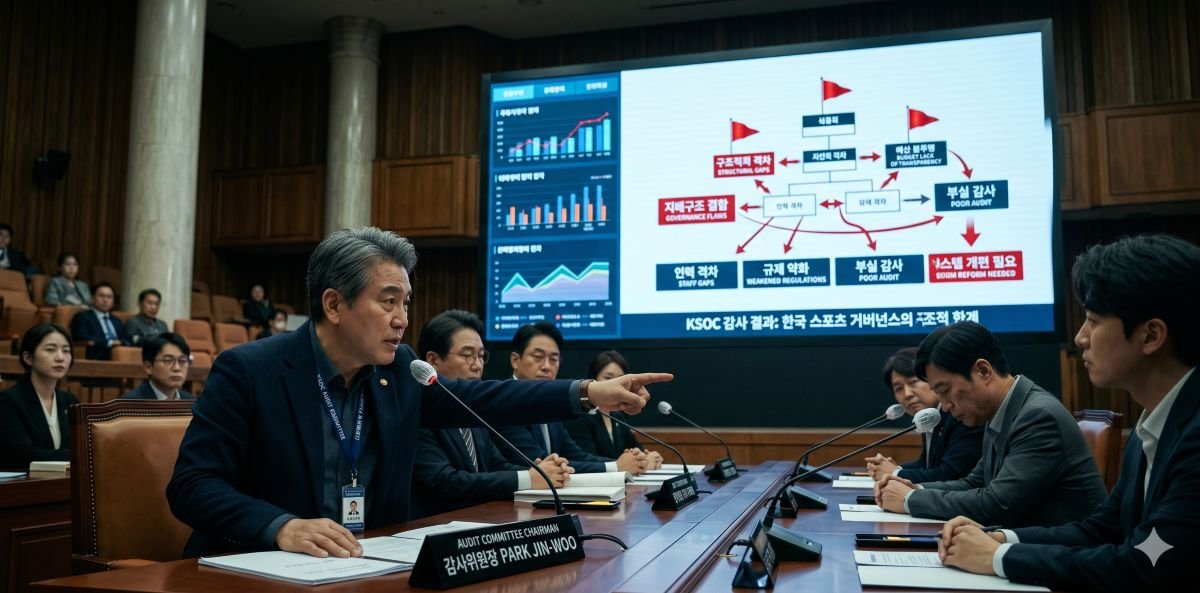
The broader question of what rights and protections athletes hold within Korean sporting institutions — and how governance structures either enable or obstruct those protections — is one that extends well beyond academic attendance requirements. CheongjuInsider’s earlier coverage of the athlete data and governance debate at Seoul National University examined how these structural questions are being raised across multiple dimensions of Korean sports policy.
What the Stalemate Reveals
The student-athlete education dispute is, at its core, a question about institutional accountability. Who is responsible for the wellbeing of a young person who enters the Korean sports system? What obligations does that system carry that cannot be traded away for competitive results? And what happens when the institution designed to produce athletic performance and the institution designed to guarantee educational access cannot agree on where one’s jurisdiction ends and the other’s begins?
Korea has been asking these questions for nearly twenty years. The answers, when they arrive, will reflect not just a policy calculation but a decision about what the country’s sports institutions are actually for — and who, beyond the medal table, they are meant to serve.