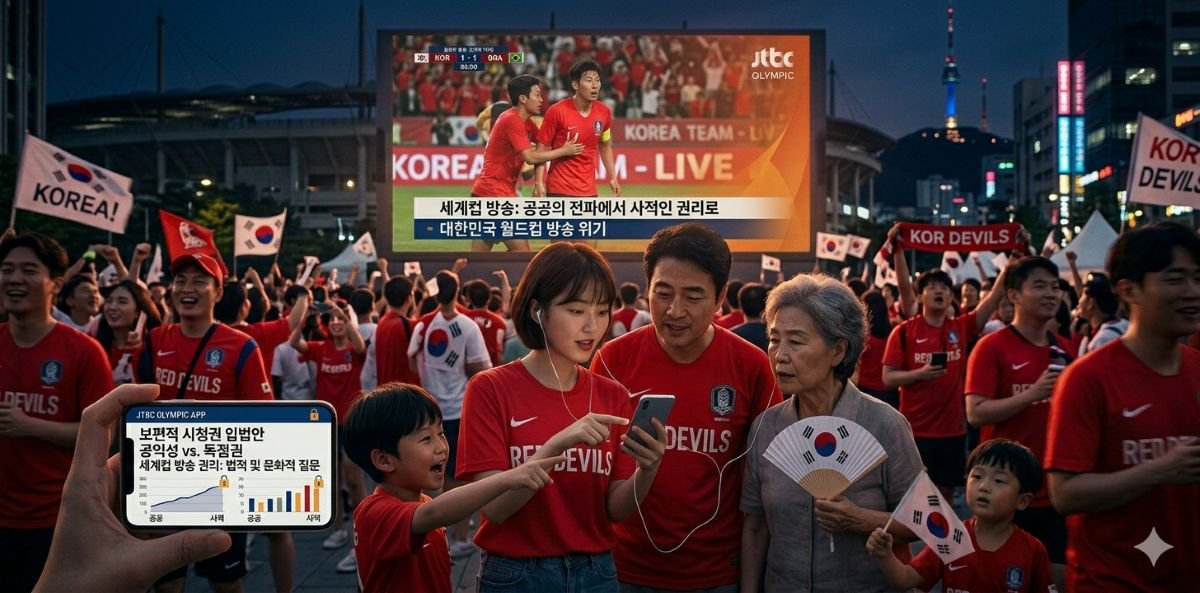

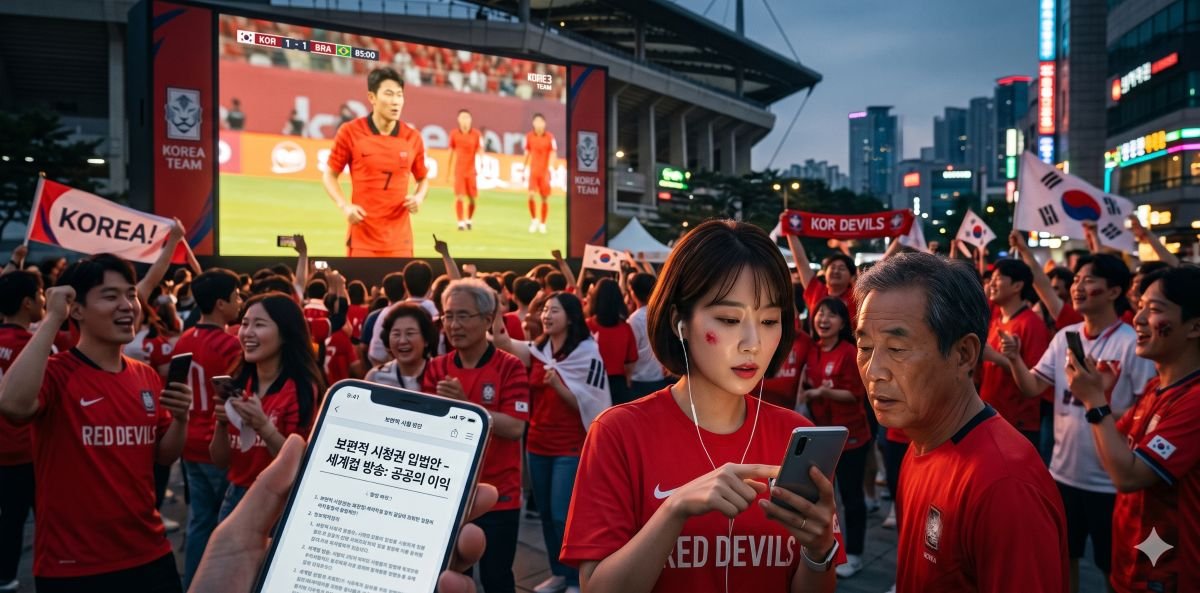
South Korea came close to missing the 2026 Winter Olympics. Not in any athletic sense — Korean athletes competed and won medals. But for millions of viewers at home, the games were effectively invisible. The Milano Cortina 2026 Winter Olympics became the first Olympic Games in 62 years to air in South Korea without terrestrial broadcast coverage, after JTBC’s exclusive rights deal left the three major free-to-air networks locked out. The opening ceremony drew a 1.8 percent viewership rating.
That number became the catalyst for a legislative debate that is still unresolved as the 2026 FIFA World Cup approaches. At the center of it is a question that sounds simple but carries significant constitutional and commercial weight: does every citizen have the right to watch the World Cup for free?
How the Exclusivity Problem Developed
The current situation traces back to 2019, when JTBC departed from the established “Korea Pool” arrangement — a cooperative framework through which the three terrestrial broadcasters, KBS, MBC, and SBS, had historically negotiated major sports rights collectively. Instead, JTBC secured exclusive rights to the 2026 through 2032 Summer and Winter Olympics directly from the International Olympic Committee, and later acquired exclusive rights to the 2025 through 2030 FIFA World Cups, reportedly paying $125 million for the 2026 tournament alone.
The consequence became clear in February 2026. With no agreement reached on resale terms for the Winter Olympics, JTBC broadcast the games alone on its pay platform. Terrestrial broadcasters, already operating under nearly two decades of declining advertising revenue and rising production costs, said the resale prices JTBC was demanding would generate hundreds of billions of won in net losses per event. The impasse held. The games aired. Most Koreans did not watch.
With the World Cup roughly 80 days away as of late March 2026, negotiations between JTBC and the terrestrial broadcasters remained deadlocked under the same structural conditions.
What the Proposed Legislation Says
In response, lawmakers introduced a Broadcasting Act amendment bill that attempts to establish a legal foundation for what they are calling universal viewing rights. The legislation defines the concept directly: universal broadcasting means are “broadcasting means through which citizens can watch in real time without additional cost burden.”
The bill goes further than definition. It requires that events designated as being of national significance — explicitly including the Olympics and the FIFA World Cup — must be made accessible to at least 95 percent of all national households. It imposes obligations on both rights holders and public broadcasters to ensure Olympic and World Cup coverage reaches audiences through public terrestrial broadcasters, specifically naming KBS and MBC as the designated delivery channels.
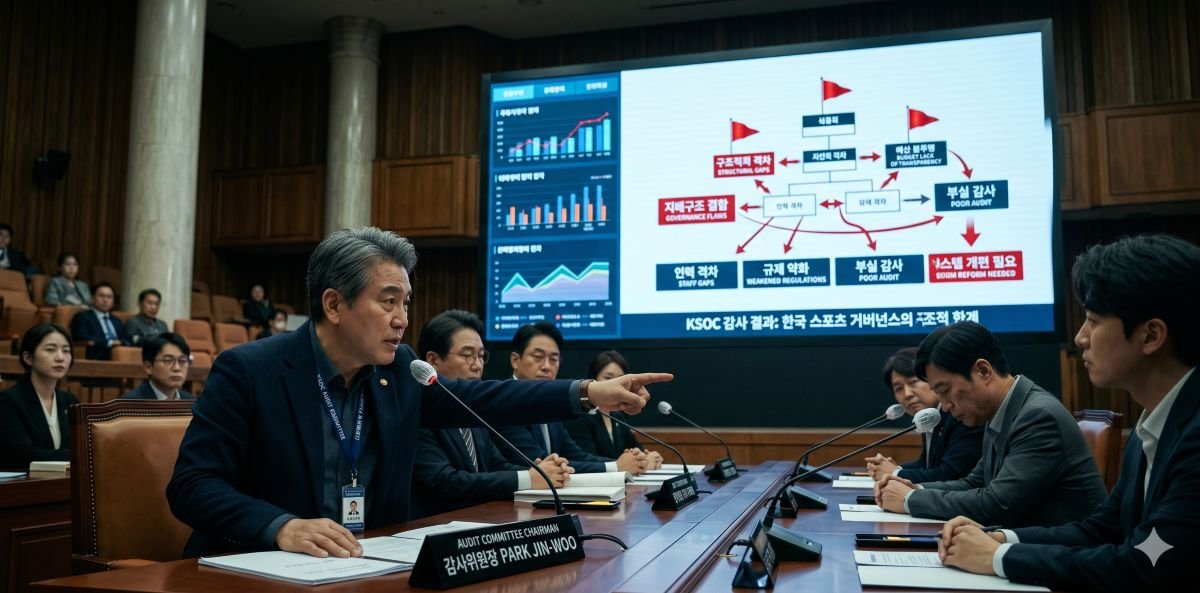
The bill also addresses a transparency problem that has complicated every negotiation: broadcasting rights contract details are currently shielded behind confidentiality clauses, making it impossible for regulators, the public, or competing broadcasters to assess whether resale demands are commercially reasonable. The proposed legislation would require submission of rights contract details to administrative authorities, giving the Broadcasting and Communications Commission the ability to take corrective action with access to actual figures rather than competing claims.
The drafters cited the United Kingdom’s Listed Events system and Australia’s Anti-Siphoning framework as international models. Both approaches identify categories of events with sufficient national cultural significance that their exclusive migration to pay platforms is legally restricted.
The Principle at the Core of the Debate
The legislative argument rests on a distinction between sports broadcasting as a commercial transaction and sports broadcasting as a public cultural resource. Broadcasting rights are undeniably commercial — JTBC paid market rates for them and is entitled to seek return on that investment. But the Olympics and World Cup occupy a different category of cultural experience than most commercial content. They are events around which national communities have historically organized shared attention, shared emotion, and shared memory.
The bill’s proponents argue that when those events become accessible only to households with the means and technical capability to access a pay platform, the shared experience fractures along economic and demographic lines. The viewing right becomes, in effect, a privilege rather than a right.
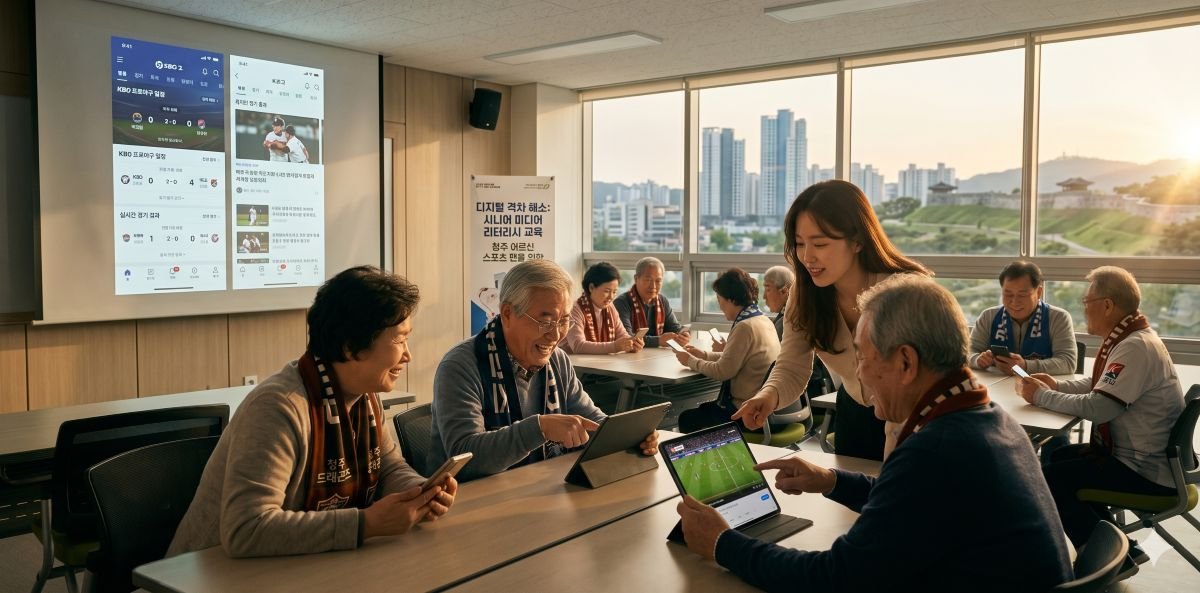
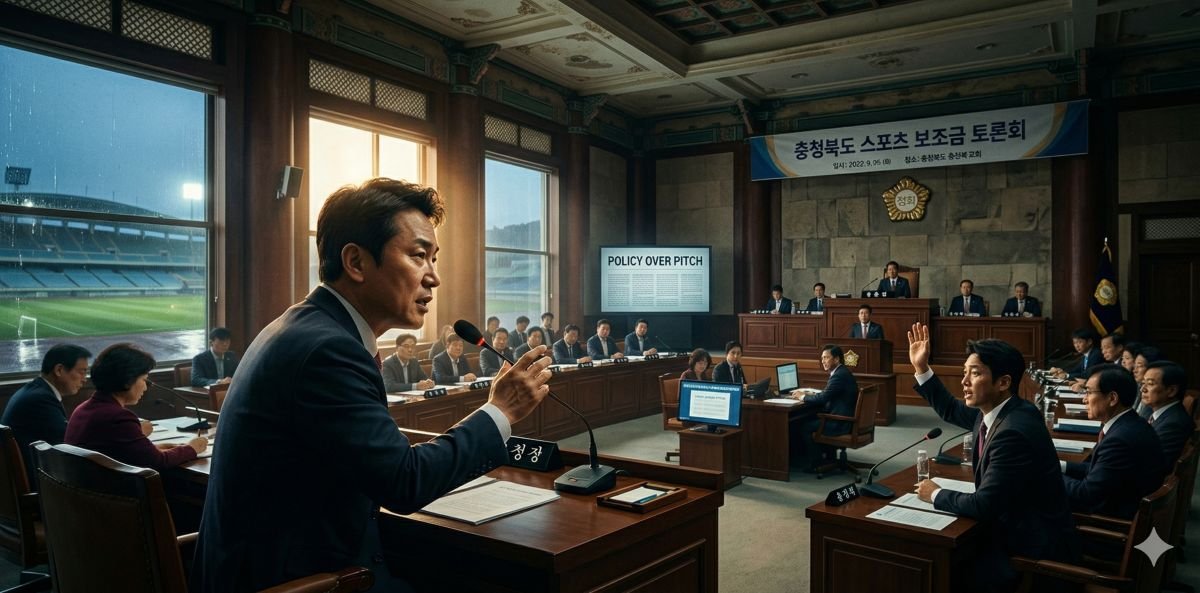
This dimension is particularly concrete in regions like Chungcheongbuk-do, where mountain terrain limits infrastructure coverage and digital device access remains lower than in metropolitan areas. For residents in those communities, the gap between nominal access and actual access is wider than national averages suggest. For context on how national broadcasting policy decisions translate into tangible differences for regional audiences, the analysis at Cheongju Insider on Korea’s sports broadcasting rights crisis and what it means for viewers provides useful regional grounding.
Whether the legislation passes before the World Cup begins in June remains uncertain. JTBC has signaled willingness to negotiate but maintains its position on cost-sharing. The terrestrial broadcasters say the numbers do not work. The government has called for public input. The Korea Media and Communications Commission has acknowledged that legal grounds to compel agreement are currently limited.
What the bill has already accomplished, regardless of its legislative fate, is to put the underlying principle on record: that some events are too culturally significant to be treated as ordinary commercial content, and that the right to watch them together should not depend on what you can afford to pay.
For broader context on how broadcasting policy frameworks develop over time and why regulatory structures tend to formalize in response to market failures, 시스템 운영의 공식화와 규칙 투명성의 구조적 진화 offers structural framing relevant to understanding why legislation of this kind tends to emerge at inflection points in how markets handle public goods.